Avoid Rework and Rust: Outdoor Kitchen Ventilation for Tucson
Avoid Rework and Rust: Outdoor Kitchen Ventilation for Tucson
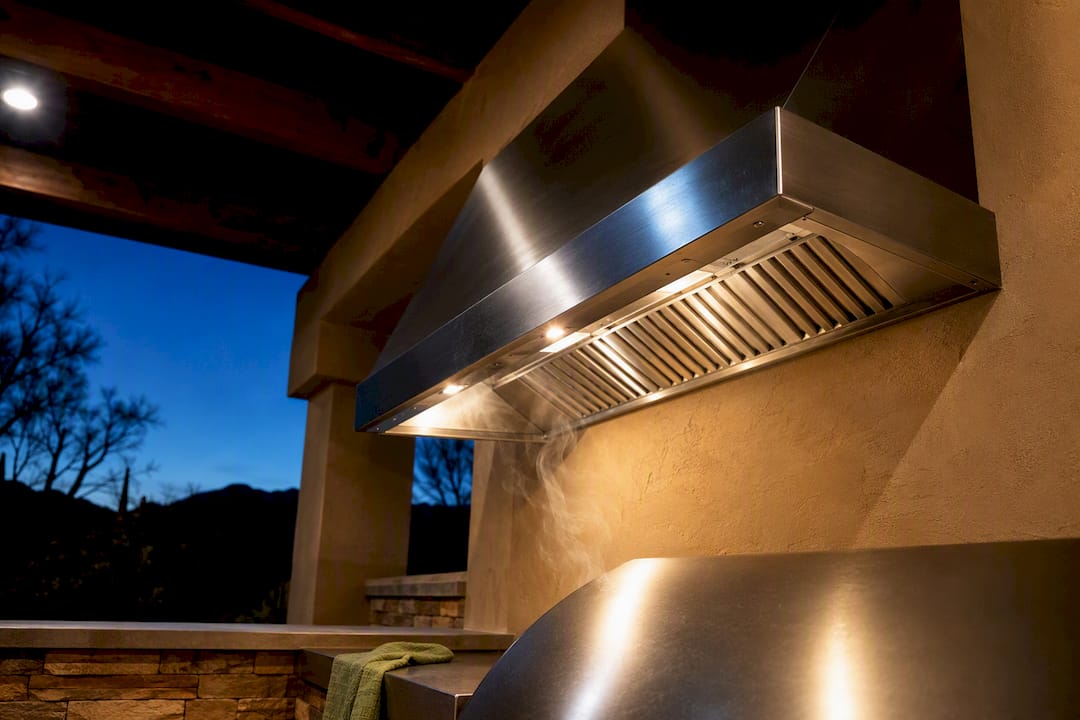
Every built-in grill island needs vent panels, and any grill cooking under a fixed roof, pergola with solid cover, or pavilion needs a ducted hood on top of that. The key guidelines are to size ventilation to grill output, extend the hood wider than the grill to improve capture, and position propane vents low and natural gas vents high based on fuel type properties, following appliance manuals and local codes. Confirm all of it against your appliance manual and local building code before you cut a single panel.
TL;DR:
- Vent panels must be sized and placed accurately based on fuel type, with low vents for propane and high vents for natural gas, to prevent dangerous gas buildup.
- Ducted vent hoods are necessary under fixed roofs or solid covers, with hood size and placement critical to effectively capture heat, grease, and combustion emissions.
- Proper ventilation planning should be integrated early in construction, including material choices resistant to local climate factors like dust and humidity.
- Conclusions about vent sizing and placement must follow appliance manuals and local codes, with appliances’ BTU ratings guiding minimum CFM and vent area.
- Site conditions such as wind and layout influence hood performance, requiring adjustments like increased CFM or wind deflectors to ensure effective smoke capture.
Table of Contents
- Why Outdoor Kitchen Ventilation Matters More Than You Think
- Vent Panels for Built-In Islands: Where They Go and How Big
- Do You Need a Vent Hood? Covered Patios, Pergolas, and Pavilions
- Sizing the Hood: CFM Rules That Actually Work
- Ducting, Termination, and the Materials That Survive Outdoors
- Fuel-Specific Venting: Propane Low, Natural Gas High
- Wind, Layout, and Site Conditions That Wreck Capture
- Maintenance, Common Mistakes, and What Inspectors Check
- A Contractor’s View on Ventilation and Desert Climate Builds
- What to Do Next Before You Build
- Planning an Outdoor Kitchen Build in Tucson?
- Sources
Why Outdoor Kitchen Ventilation Matters More Than You Think
An open patio grill has one advantage most homeowners take for granted: the sky is the ventilation system. Add a roofline, a pergola with a solid top, or three walls around a seating area. That free airflow disappears. Heat, grease vapor, and combustion byproducts start pooling instead of dispersing, which creates both a comfort problem and a real safety issue.
Ducted range hoods that vent to the outdoors remove cooking pollutants, including fine particulate matter, far more effectively than any recirculating setup. Public health guidance from the Washington State Department of Health recommends ducted exhaust specifically because it carries PM2.5 and combustion gases away rather than filtering and recirculating them into the space. That guidance was written with kitchens in mind, but the physics don’t change once you move the grill outside and put a roof over it.
There’s also an asset-protection angle nobody mentions until the damage shows up. Grease and moisture that linger under a covered structure stain stone, pit metal, and rot wood framing over a few seasons. The safety stakes are documented, too: the U.S. Consumer Product Safety Commission has recalled outdoor kitchen installations over fire and burn hazards tied to improper assembly.
What changes once you add a roof:
- Natural cross-breezes stop clearing smoke and heat on their own.
- Grease and moisture collect on ceiling surfaces instead of dispersing.
- Combustion gases from propane or natural gas can concentrate in the cabinet cavity below the grill.
- Any of these conditions triggers the need for a ducted vent hood, not just island vent panels.
Vent Panels for Built-In Islands: Where They Go and How Big
Cabinet ventilation isn’t optional cosmetic detailing. It’s the difference between a grill island that ages gracefully and one that traps propane fumes against a stucco wall. Every enclosed island housing a gas grill, side burner, or fuel line needs vent panels sized to let vapors escape before they build up to a dangerous concentration.
Statistic to remember: Industry buying guides from BBQGuys recommend placing low vents for propane installations and high vents for natural gas, because the two fuels behave in opposite ways when they leak. Propane is heavier than air and sinks toward the floor of the cabinet; natural gas is lighter and rises toward the top.
The placement logic breaks down into three practical rules:
- Match vent height to fuel type. Propane systems need vent openings low, near the cabinet floor, where heavier-than-air gas would otherwise pool. Natural gas systems need vents near the top of the enclosure instead.
- Use opposing vents for cross-ventilation. A single vent panel traps as much as it releases. Pairing a vent on one side of the island with a matching vent on the opposite side lets air move through the cavity instead of stagnating in a corner.
- Size vents to the enclosure, not a guess. Bigger islands with more fuel lines, storage, and heat-generating components need proportionally more vent area, not a single token panel bolted on for looks.
None of this overrides the paperwork. Every grill manufacturer publishes minimum vent area and placement specs in the installation manual, and local building codes may add their own requirements on top of that. When the two disagree, follow whichever is stricter, and keep the manual on hand for the inspector.
Do You Need a Vent Hood? Covered Patios, Pergolas, and Pavilions
Here’s the rule that settles most of the guesswork: any fixed overhead structure that limits natural airflow above the grill calls for a ducted vent hood. An open patio with nothing overhead generally doesn’t need one. A pergola with a solid roof, a pavilion, or a covered outdoor kitchen attached to the house almost always does.
Which hood style fits depends on how the island sits in the space:
- Wall-mounted hoods work when the grill backs up against a house wall or a masonry accent wall, giving the duct a short, direct run to the exterior.
- Island hoods hang from the ceiling structure itself and suit grill islands positioned away from any wall, common in larger pavilion layouts.
- Under-cabinet or low-profile hoods fit tighter builds where ceiling height is limited, though they typically demand closer attention to mounting height since there’s less vertical clearance to work with.
Grill placement and roof geometry dictate the choice more than personal preference does. A grill tucked into a corner under a pavilion needs a different hood than one centered on an open-sided island, and the ducting path back to open air changes with each layout. Get this decision wrong at the framing stage and you’re cutting into finished ceiling material later to fix it.
Sizing the Hood: CFM Rules That Actually Work
Undersized hoods are the single most common outdoor kitchen mistake, and it usually comes down to homeowners applying indoor kitchen assumptions to an outdoor grill that puts out far more heat.
The numbers that matter: BBQGuys uses a rule of thumb of roughly 1 CFM for every 100 BTU of grill output, with a practical outdoor minimum well above what an indoor range would need. RangeCraft reports that professional-grade outdoor grills commonly require 1,200 to 2,000 CFM to handle the smoke, heat, and grease volume they generate, a range that dwarfs typical indoor hood output.
Three factors determine whether that CFM number actually translates into clean capture at the cooking surface:
- Hood width should extend 3 to 6 inches beyond the grill on each side, catching the plume before cross-breezes push it sideways past the hood’s edge.
- Mounting height above the grill has to sit within the range specified by the hood manufacturer. Too high and the hood loses suction at the cooking surface; too low and it interferes with grilling.
- Makeup air matters more than most buyers realize. Research on hood capture stability, published in the journal Buildings, found that supplying air near the cooktop stabilizes exhaust capture and helps prevent unintended infiltration, particularly in tightly enclosed cooking areas.
A hood rated for 1,500 CFM installed too high above the grill, or without any width margin past the cooking surface, performs worse than the rating suggests. The number on the spec sheet is only half the equation.
Ducting, Termination, and the Materials That Survive Outdoors
Where the exhaust goes matters as much as how much air it moves. Ducting should terminate directly outside, never into an attic space or crawlspace, where grease-laden air becomes a fire hazard and a moisture problem in a void nobody inspects regularly. Termination points need clear access for periodic cleaning, since grease buildup inside a duct run is a leading cause of kitchen exhaust fires.
Material choice separates hoods that last from hoods that need replacing in a few seasons:
- Choose rigid stainless steel or aluminum ducting over corrugated flexible duct, which traps grease in its ridges and resists cleaning.
- Specify 304-grade stainless steel for any hood or ducting exposed to weather. Cheaper 430-grade steel is prone to rust once it sees rain, irrigation overspray, or high humidity, an issue documented by range hood manufacturers themselves.
- Keep exhaust and any fresh-air supply ducts physically separated, a principle emphasized in commercial kitchen ventilation design guidance that applies just as much to a residential outdoor build.
Pro Tip: Ask your installer to show you the duct termination point before drywall or veneer goes up around it. If you can’t picture reaching that spot with a shop vac and a grease-cutting cleaner five years from now, it’s in the wrong place.
Fuel-Specific Venting: Propane Low, Natural Gas High
Fuel physics, not preference, decides where a vent panel goes. Get this backward and you’re not just failing an inspection, you’re creating a real accumulation hazard inside a cabinet a few feet from an open flame.
- Propane systems vent low. Propane is heavier than air, so any leaked gas sinks and pools at the bottom of an enclosed cabinet. Vents near the floor let it escape before it reaches a concentration that could ignite.
- Natural gas systems vent high. Natural gas is lighter than air and rises, so vents near the top of the island let it disperse upward and outward instead of collecting under a cabinet lid.
- Shutoffs and regulators need their own accessible ventilation. Both the gas shutoff valve and the regulator should sit where you can reach them and where nearby vent openings keep that immediate area clear of accumulated gas, not tucked behind a panel with no airflow at all.
Industry guides typically call for vent panels on at least two sides of a fuel-holding cabinet, spaced to create the cross-ventilation effect described earlier. Skipping a vent because it’s on the side facing the seating area is exactly the kind of shortcut that turns into a warranty claim, or worse.
Wind, Layout, and Site Conditions That Wreck Capture
A hood rated at the right CFM can still fail to capture smoke if the site around it works against it. Capture depends on matching the hood’s extraction pull to both the heat plume rising off the grill and whatever wind is moving across the patio, a relationship documented in hood and plume geometry research. Cross-drafts push the plume sideways faster than a hood can pull it up, which is why a perfectly sized hood in a windy corner still lets smoke drift toward the dinner table.
A few adjustments fix most of these problems:
- Add end panels or baffles on the open sides of an island exposed to prevailing wind.
- Orient the grill so smoke naturally drifts away from the house and from seating areas, not toward them.
- Position seating upwind of the cooking surface whenever the site layout allows it.
- Upsize CFM above the standard calculation on consistently windy sites, since the hood is fighting crosswind as well as the plume.
Maintenance, Common Mistakes, and What Inspectors Check
Ventilation systems fail quietly. Grease builds up in a duct run for months before anyone notices, and by then it’s a fire risk instead of a cleaning chore. Clean grease traps and hood filters on a regular schedule, and make sure duct runs have physical access points, not just a termination cap you can see from the yard.
The mistakes that show up again and again on outdoor builds: vent panels mounted at the wrong height for the fuel type, ducting routed into a soffit or crawlspace instead of straight outside, and hoods undersized because someone used an indoor CFM chart on an outdoor grill.
| Item to check | Why it matters |
|---|---|
| Grill BTU rating | Determines minimum required CFM |
| Vent panel height vs. fuel type | Propane low, natural gas high |
| Duct termination point | Must exit outdoors, never into attic or crawlspace |
| Hood width vs. grill width | Needs 3 to 6 inch overhang each side |
| Manufacturer manual on file | Required for inspection and warranty claims |
A Contractor’s View on Ventilation and Desert Climate Builds
Ventilation planning happens at the framing stage, not after the appliances arrive. Installers coordinate vent panel placement with the island’s framing and gas or regulator access early, so nobody’s cutting into finished cabinets after the grill is already set in place, a sequencing detail highlighted in Jackpotlandscape’s own outdoor kitchen build in Vail, Arizona.
Southern Arizona adds its own wrinkle: intense sun and dust accelerate corrosion on lower-grade metal, which is why 304 stainless earns its higher price tag in this climate. A few things worth keeping in mind for a desert build.
- Sheltered heat buildup under a pergola roof in Tucson summers makes proper venting a comfort issue, not just a safety one.
- Rust-resistant components extend usable hours across a longer hot season and cut long-term maintenance costs, a factor built into how Jackpotlandscape approaches outdoor living projects.
- Dust infiltration through poorly sealed vent panels adds extra cleaning burden if vents aren’t positioned with airflow patterns in mind.
What to Do Next Before You Build
The decisive call is simple: vent panels for every built-in island, a ducted hood the moment cooking happens under any fixed roof. Everything else in this guide is detail supporting that one decision.
Before contacting anyone, do three things. Record your grill’s BTU rating from the spec plate. Measure your island’s actual length and depth. Pull the appliance manual and check its vent specs against whatever your local inspector requires. Those three numbers turn a vague conversation with a contractor into a real plan. When you’re ready to move from planning to building, a design consultation with a landscaping professional can include ventilation planning directly into the island layout instead of retrofitting it later.
— Noah
Planning an Outdoor Kitchen Build in Tucson?
A professional landscaping team treats ventilation as part of the framing plan from day one, not a fix bolted on after the pavers are already set. Because vent panel placement, gas line routing, and island framing get coordinated together during the build, homeowners skip the expensive rework that comes from cutting stone or stucco after the fact.

That coordination extends to material selection too. Whether the island sits on a travertine patio or a paver surface, Jackpotlandscape specifies corrosion-resistant hardware and finishes suited to Southern Arizona’s sun and dust, the same climate logic that shapes every outdoor living space the company builds. If you’re pairing your outdoor kitchen with new hardscape, the paver installation team works from the same site plan, so grill island, patio surface, and seating area come together as one project instead of three separate decisions. If lighting is part of your outdoor living plan, coordinating that early with a partner like Capital Pro Lighting avoids the same kind of retrofit headaches ventilation planning is meant to prevent.
Ready to see what a properly vented outdoor kitchen looks like on your property? Reach out to a landscaping professional for a design consultation and get a plan that accounts for ventilation, materials, and layout before a single paver goes down.
Sources
- Outdoor kitchen hood requirements — RangeCraft
- Outdoor kitchen island vents & hoods buying guide — BBQGuys
- Ventilation while cooking — Washington State Department of Health
- CPSC recall: Paradise Grills outdoor kitchens — U.S. Consumer Product Safety Commission
- Study on hood capture stability with supply air — MDPI (Buildings)