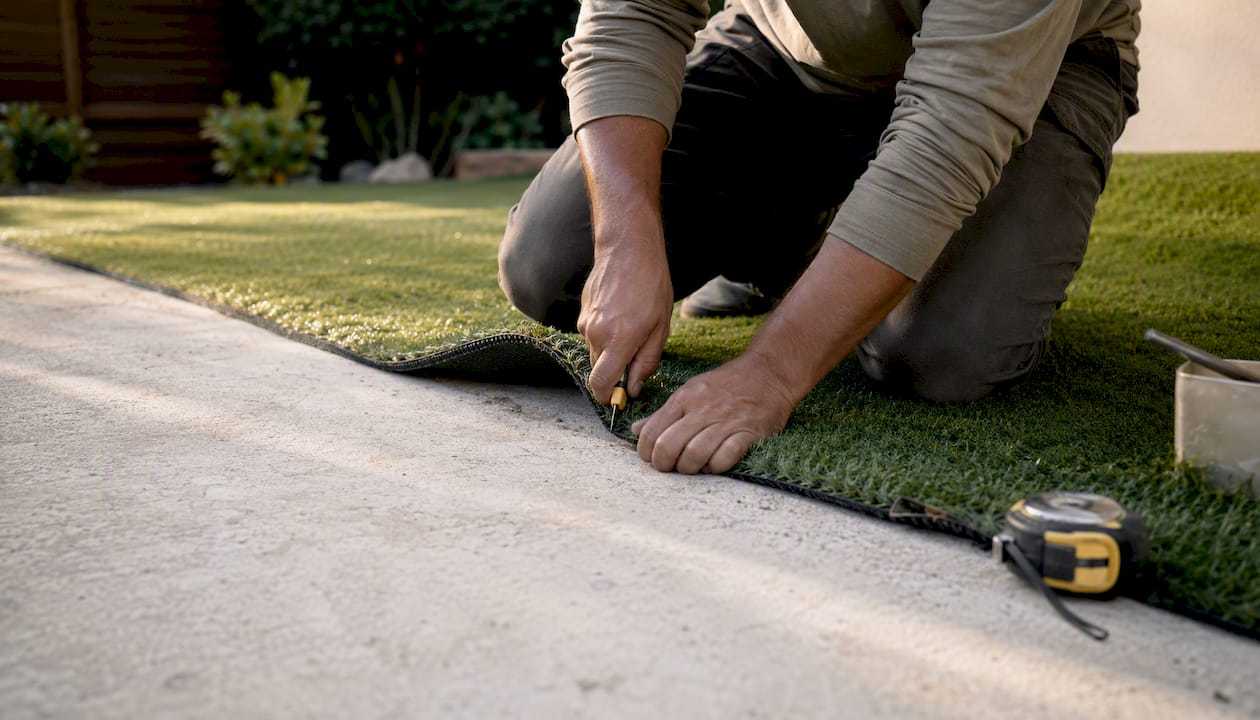
Yes, you can install artificial turf directly on concrete, and in many cases it’s faster than a soil-based install because the slab already gives you a level base. But three things determine whether the result looks great for a decade or turns into a soggy, lumpy mess within a year.
First, drainage. Concrete does not absorb water like soil does, so if the slab doesn’t already slope away from your house or a drain, water will pool under the turf. Second, surface condition. Cracks, spalling, or a slab that’s actively heaving or shifting will telegraph through the turf and wear it out faster. Third, comfort. Bare turf laid straight onto a hard slab feels exactly like what it is: carpet on concrete. Kids and pets notice.
Turf-on-concrete works especially well on patios, pool surrounds, and balconies, where the slab is stable and drainage can be engineered into the install. It’s a poor fit for slabs with active movement, deep structural cracks, or a foundation that’s still settling. Fix the concrete first, or don’t install yet.
- Drainage: The slab needs a slope or drainage system, or water will pool under the grass.
- Surface condition: Cracks and unevenness show through the turf and shorten its life.
- Comfort: Padding underneath makes a real difference on hard surfaces where people walk barefoot.
One detail worth knowing before you start pricing materials: the single biggest driver of long-term success on a concrete install isn’t the turf’s pile height or brand. It’s whether the water underneath has somewhere to go.
Key Takeaways
Turf performs well on concrete only when drainage is engineered in, the slab is structurally sound, and comfort underlay matches how the space will be used.
| Point | Details |
|---|---|
| Drainage comes first | Test with a hose before installing anything; pooling means you need weep holes or a drainage mat. |
| Repair the slab fully | Cracks and spalling telegraph through turf and shorten its usable life significantly. |
| Match underlay to use | Foam pads for comfort on patios, drainage mats for pool decks and rooftops with poor natural slope. |
| Hire a pro for complexity | Large areas, pool decks, rooftops, or damaged slabs justify a professional assessment. |
| Jackpot Landscaping’s approach | Offers on-site drainage assessment and turf installation built for Tucson’s desert conditions. |
Sources and Installation Guides Worth Reading
- Installing Artificial Grass Over Concrete covers drainage and comfort considerations specific to hard-surface installs.
- Can You Install Turf Over Concrete? walks through slab drainage strategies in more depth.
- How to Lay Artificial Grass on Concrete: Step by Step Guide outlines the full install sequence from prep to infill.
- Artificial Turf Installation in Tucson, AZ explains Jackpot Landscaping’s approach to desert-specific turf systems
When reading any additional installation guide, prioritize the sections on drainage and underlay over the sections on turf appearance. Appearance is easy to fix later. A bad drainage decision usually isn’t.
Table of Contents
- Tools and Materials for Installing Turf on Concrete
- How Do You Prepare Concrete Before Laying Turf?
- What Goes Under Artificial Turf on Concrete?
- Step-by-Step Turf Installation on a Concrete Patio
- Infill, Trimming, and Final Finishing Steps
- Fixing Common Problems With Turf on Concrete
- When Should You Hire a Professional Turf Installer?
- How Jackpot Landscaping Handles Turf-on-Concrete Installs
Tools and Materials for Installing Turf on Concrete
Before you call a contractor or head to a supply yard, know what a proper job actually requires. Quoting a job accurately, whether you’re doing it yourself or vetting a pro’s estimate, starts with this list.
Materials:
- Artificial turf rolls (measure square footage, then add 5 to 10% for waste and pattern matching)
- Seaming tape and outdoor-rated seaming adhesive for joining rolls
- Exterior-grade turf adhesive for bonding to concrete, or masonry anchors for perimeter trim
- Shock pad or drainage mat (skip only for small decorative areas)
- Infill: kiln-dried sand or silicone-coated microbeads, depending on use
Tools:
- Pressure washer for cleaning the slab
- Notched trowel for spreading adhesive evenly
- Utility knife with sharp, replaceable blades for cutting turf
- Straight edge for clean seams
- Drill with masonry bit if you need to add drainage weep holes
- Stiff broom or power brush, plus a seed-spreader style roller for infill
Measuring is simple: multiply length by width in feet to get square footage, then check the coverage rate printed on your adhesive can, since most exterior turf adhesives cover a moderate range depending on trowel notch size. Underlay thickness generally runs from a quarter inch for decorative patios up to a half inch or more for play areas where kids will be running around.
Pro Tip: Buy extra utility knife blades as needed. Concrete grit dulls blades fast, and a dull blade tears fibers instead of cutting them cleanly.
How Do You Prepare Concrete Before Laying Turf?
Preparation is where most turf-on-concrete jobs succeed or fail, and it’s the step people rush the most.
Start with a visual inspection. Walk the entire slab and look for cracks wider than a quarter inch, spalling (flaking or crumbling surface concrete), and any spot where one section sits noticeably higher or lower than its neighbor. Push on suspect areas. If a section rocks or feels hollow underneath, that’s a sign of a void beneath the slab, and that’s a structural issue, not a cosmetic one. A slab with active movement isn’t a good candidate for turf until it’s repaired or replaced.
- Clean thoroughly. Sweep loose debris, then pressure-wash to remove dirt, algae, and old sealant residue. Use a degreaser on oil stains.
- Let it dry fully. Concrete needs to be completely dry before adhesive goes down, typically 24 to 48 hours after pressure-washing depending on humidity and sun exposure.
- Patch and level. Fill small cracks and pits with a concrete patch compound. For shallow dips across a larger area, a self-leveling screed evens things out without a full tear-out.
- Test drainage. Run a garden hose over the slab and watch where water goes. If it pools instead of running toward an edge or drain, you have a drainage problem to solve before installing anything on top.
- Address pooling. For minor pooling, drilling weep holes at the low points lets water escape through the slab. For serious pooling across a large area, you may need a drainage mat system or, in extreme cases, to have the slab re-pitched.
Existing damage doesn’t just look bad. Constant friction from a broken or shifting edge will abrade the turf backing from underneath, cutting years off its lifespan even if the surface looks fine on day one. Repair now or pay for it twice later.
What Goes Under Artificial Turf on Concrete?
You have three real options here, and the right one depends on how the space gets used.
No underlay works fine for small decorative areas, like a strip along a walkway or a display patch, where nobody’s walking barefoot or letting kids play. It’s the cheapest and fastest option, but it offers zero cushioning and zero help with drainage.
Shock-absorbing foam pads are the standard choice for patios, backyard lounge areas, and anywhere people will actually spend time on the turf. A free-draining foam underlay improves comfort dramatically and reduces the risk of water getting trapped between the concrete and the turf backing. For play areas, a shock pad isn’t optional. It’s the difference between a fall that stings and a fall that hurts.
Permeable drainage mats or tiles solve the drainage problem directly by creating channels for water to move laterally to an edge or drain, even on a slab with imperfect slope. These cost more and add installation time, but they’re often the only reliable fix for a patio or pool deck that doesn’t drain well on its own.
| Underlay Type | Comfort | Drainage | Installation Time | Relative Cost |
|---|---|---|---|---|
| No underlay | Low | None | Fastest | Lowest |
| Foam shock pad | High | Moderate | Moderate | Moderate |
| Drainage mat/tile | Moderate | High | Longest | Highest |
For patios, a foam shock pad is usually the right call. For pool surrounds and play areas, pair a shock pad with a drainage plan, since drainage matters more here than almost anywhere else in the yard. For rooftop and balcony installs, drainage mats often win because they manage water without adding significant weight.
Pro Tip: On rooftops and balconies, check the load rating before you commit to a thick foam pad. And leave a small ventilation gap at the perimeter. Turf on concrete in direct sun traps heat, and without airflow, that heat has nowhere to go.
Step-by-Step Turf Installation on a Concrete Patio
Once your slab is clean, dry, and sloped correctly, the installation itself follows a fairly consistent sequence.
- Dry-fit the turf. Roll it out and let it relax in the sun for a few hours before cutting. This releases factory creasing and makes seams sit flatter. Keep all pieces running the same pile direction, and leave a couple of inches of overhang on every edge.
- Cut to fit. Use a sharp utility knife and a straight edge, cutting from the backing side whenever possible for cleaner lines.
- Join seams. Lay seaming tape underneath the joint, apply adhesive, and press the two pieces together, brushing fibers across the seam so the joint disappears visually.
- Secure the perimeter. Use exterior-rated turf adhesive along the edges, or masonry anchors for aluminum trim pieces. Never seal off a drainage channel with adhesive; leave gaps where water needs to escape.
- Apply adhesive correctly. Work in small sections so the adhesive doesn’t skin over before you place the turf. Follow the manufacturer’s open time, and expect several hours of cure time before the area can handle foot traffic.
Overall, expect this baseline sequence to hold regardless of who does the work: clean and repair, test drainage, lay underlay, dry-fit, seam, secure the perimeter, cure. Wear gloves and work in a ventilated space when using solvent-based adhesives, and keep pets and kids off freshly cut edges until seams are fully set.
Infill, Trimming, and Final Finishing Steps
Infill isn’t cosmetic. It weighs down the turf backing, helps blades stand upright, and adds a layer of cushioning on top of whatever underlay you used. For most concrete patio installs, kiln-dried sand works well and runs roughly one to two pounds per square foot, spread with a drop spreader. Silicone microbeads cost more but stay cooler underfoot and drain better, which matters more on concrete than on soil.
For edges, you’ve got three approaches. Adhesive-only edges work fine on small, low-traffic areas. A trim-and-cap method, where you fold the turf edge under and secure it, gives a cleaner look on visible borders. Aluminum edging strips are the most durable option and hold up best where foot traffic or lawn furniture regularly crosses the boundary.
- Brush the entire surface against the grain to lift fibers after infill goes down
- Use a stiff broom or a power brush for large areas to save your back
- Walk the perimeter and press down any spots where the edge isn’t fully bonded
- Check every seam by hand. If you can lift a corner with two fingers, it needs more adhesive
- Confirm drainage holes or channels are clear of infill and debris before calling the job done
Fixing Common Problems With Turf on Concrete
Even a solid install runs into issues. Most are fixable in an afternoon.
Standing water after rain almost always means the slab’s slope wasn’t accounted for, or a drainage mat wasn’t installed where it should have been. Small pools can often be solved by drilling additional weep holes at the low point. Widespread pooling across the whole surface usually means you need to add a drainage layer you skipped the first time.
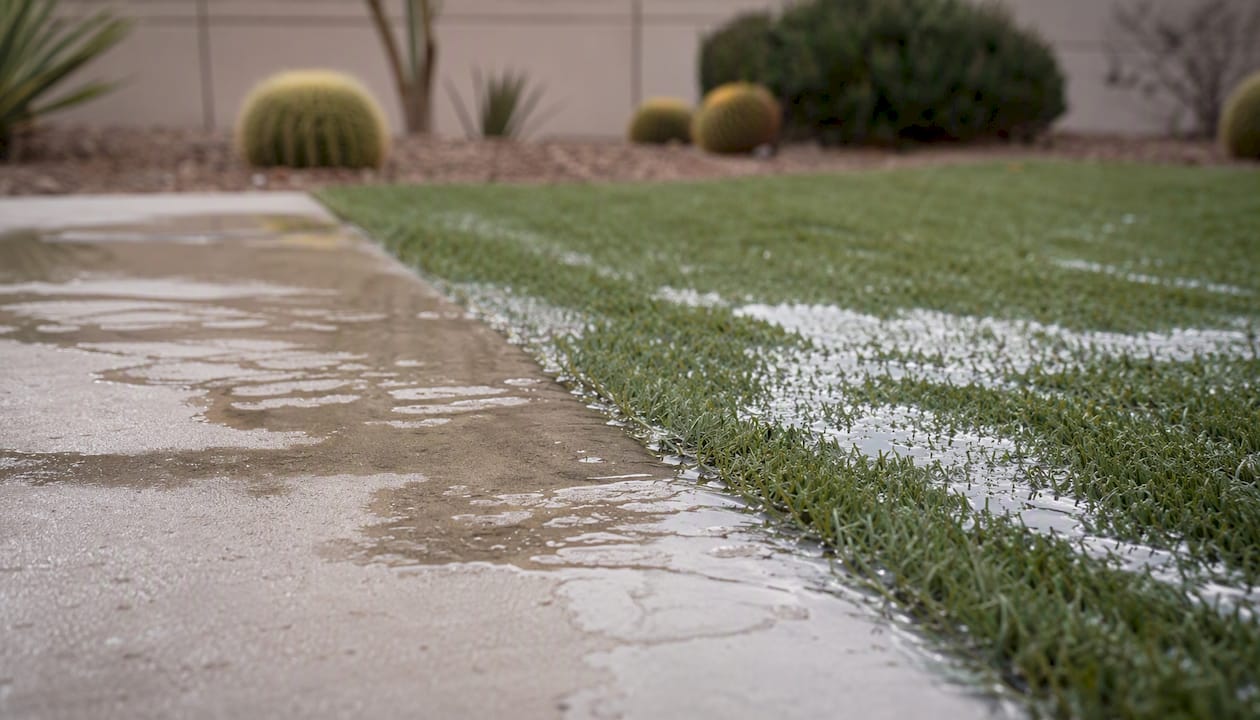
Lifting edges happen when adhesive wasn’t applied evenly or the concrete wasn’t fully dry during bonding. Reapply adhesive to the affected section, weight it down while it cures, and check that the surrounding concrete isn’t holding moisture that’s breaking the bond.
Seams separating is almost always an adhesive or tape problem, not a turf problem. Clean out the old adhesive, reapply fresh tape and adhesive, and press firmly for the full cure window.
Wrinkles usually mean the turf wasn’t given enough relaxation time before cutting, or it was stretched unevenly during install. Sometimes reheating the area with sun exposure and re-securing the edges resolves it. Persistent wrinkling across a large section may mean a reinstall.
Hot surfaces in direct sun are a real issue with turf on concrete, since the slab holds heat and radiates it back up through the fibers. Lighter-colored infill and adequate airflow underneath help, but there’s no way to fully eliminate this in full-sun exposures.
If a problem keeps recurring in the same spot after repairs, check the concrete underneath. Cosmetic fixes on top of a structural crack or void will keep failing until the slab itself is addressed.
When Should You Hire a Professional Turf Installer?
Some jobs are genuinely doable as a weekend project. Others aren’t, and knowing the difference saves you money and headaches.
Call a professional if you’re dealing with a large square footage, a slab with any slope complexity, a pool deck where drainage and safety both matter, a rooftop or balcony install with load and ventilation concerns, or any slab showing signs of movement or deterioration. These situations have more failure points, and a mistake is expensive to undo once turf and adhesive are already down.
When you’re getting quotes, ask direct questions:
- What’s the warranty on labor versus materials?
- What specific drainage solution do you plan for this slab?
- What adhesive and underlay system will you use, and why?
- What’s the realistic timeline from prep to walkable turf?
Watch for red flags. A contractor who has no drainage plan, refuses to address visible slab damage, or gives you a vague answer on curing time is cutting corners somewhere. A serious installer walks the site, tests drainage, and explains their material choices before you sign anything.
Expect cost drivers in a professional quote to include square footage, underlay type, drainage complexity, slab repairs, and turf grade. Timeline for a standard residential patio typically runs a few days from prep through cure, longer if repairs or drainage work come first.
Pro Tip: Ask for photos of a past project on a similar slab condition to yours, not just a finished lawn. How a contractor handled someone else’s cracked or uneven concrete tells you more than any sales pitch.
Installer Perspective: What Concrete Installs Really Involve
Concrete gives you a stable base and a fast turnaround. There’s no digging, no soil compaction to worry about, and no weed barrier fighting against roots pushing up from below. That’s the honest upside, and it’s real.
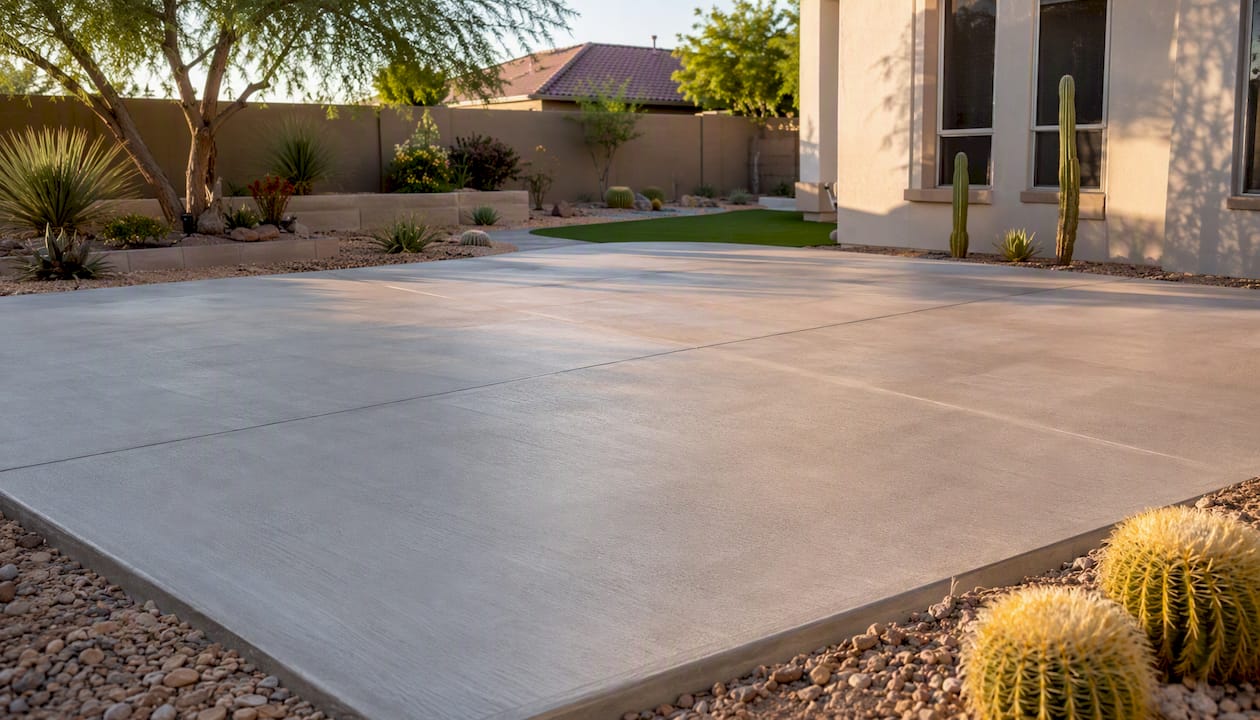
The honest downside is that concrete doesn’t forgive shortcuts. It’s harder underfoot than soil no matter how good your underlay is, it demands a real drainage plan instead of relying on natural percolation, and any flaw in that slab, no matter how small, will eventually show through the turf on top of it. A hairline crack today becomes a visible ridge in the grass within a couple of seasons if it’s not addressed first.
Pro Tip: The single best thing you can do to extend the life of turf on concrete is over-invest in slab prep relative to everything else. A mediocre underlay on a perfectly repaired and sloped slab will outlast premium turf laid over cracked concrete every time.
How Jackpot Landscaping Handles Turf-on-Concrete Installs
If your slab has any drainage uncertainty, visible cracking, or you’re just not confident diagnosing what’s underneath, that’s exactly the situation where a professional installer earns their fee. Jackpot Landscaping has spent over 15 years installing turf and hardscape across Tucson and Southern Arizona, and desert slabs come with their own quirks: heat expansion, monsoon runoff, and soil that shifts more than people expect.

Every project starts with an on-site assessment of your concrete, a real drainage plan instead of a guess, and a clear timeline before any adhesive gets mixed. Our backyard turf and paver work in Sahuarita shows the kind of integrated transitions and drainage detailing that separates a lasting install from one that fails in two summers. If you’d rather skip the guesswork on adhesive types, underlay choice, and slab repair, request a quote for turf installation and get a clear picture of your site’s specific cost drivers before you commit to anything.