Cut Backyard Dust in One Weekend: Tucson Dust Control Scales to Pavers
Cut Backyard Dust in One Weekend: Tucson Dust Control Scales to Pavers
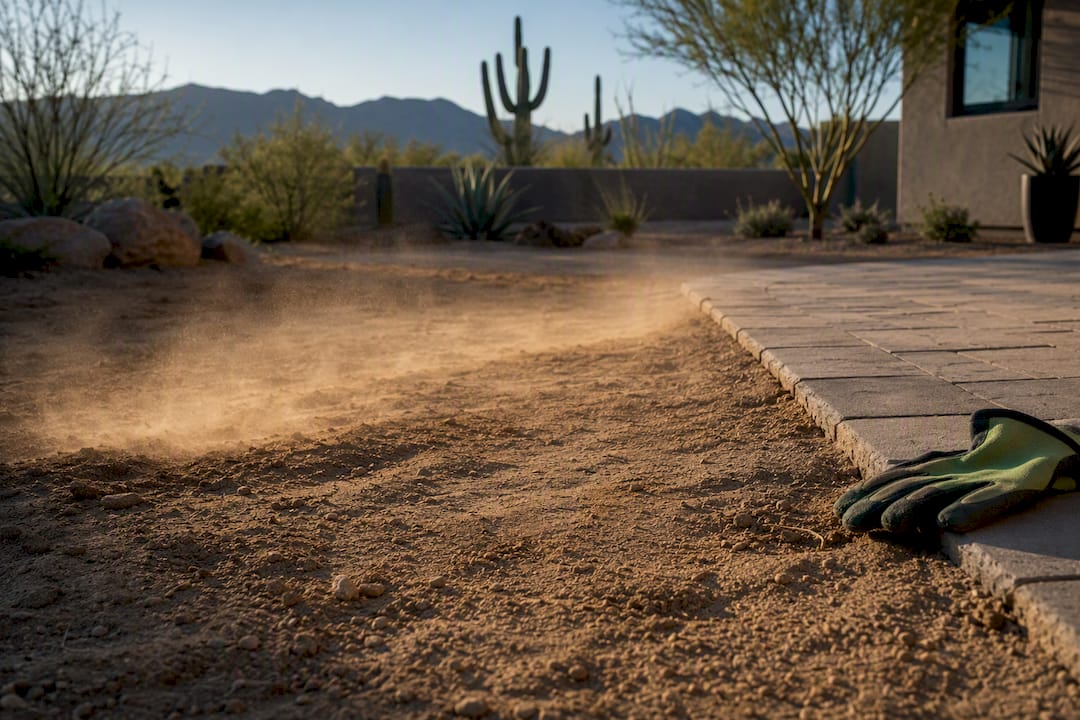
The fastest way to cut backyard dust is a two-part plan: cover exposed soil right away with mulch, gravel, or a similar surface layer, then water it lightly and often instead of hosing it down once a week. That buys you clean air and clean patio furniture while you plan something permanent, like turf or pavers, since bare dirt always finds a way to kick dust back up eventually. Quick fixes cost less upfront but demand ongoing labor; permanent cover costs more once and mostly ends the problem.
TL;DR:
- Permanent solutions like pavers and artificial turf eliminate dust at the source, lasting for decades with minimal maintenance, unlike temporary fixes that need frequent reapplication.
- Gravel compacted 2 to 3 inches deep is cost-effective and durable, requiring only occasional re-compaction in high-traffic areas, unlike mulch which decomposes and needs regular replenishment.
- Light, frequent watering keeps dust down more effectively than heavy, infrequent soaking, especially when performed early in the morning to reduce evaporation.
- Salt-based dust suppressants work best in humid climates and can cause corrosion and plant damage if misused, making them less suitable for very arid yards.
- If dust persists after temporary fixes and your yard is exposed to consistent wind or remains adjacent to undeveloped dirt lots, a permanent cover with windbreaks becomes necessary.
Table of Contents
- Backyard Dust Control Methods That Actually Work
- Choosing Between a Quick Fix and a Permanent Fix
- Your Weekend Dust Control Action Plan
- Watering and Salt Treatments: What Actually Works
- Permanent Fixes: Pavers, Turf, and When to Call a Pro
- Keeping Dust Away: Maintenance and Warning Signs
- Get a Free Landscaping Quote in Tucson, AZ
- The Real Talk on Backyard Dust
- Sources
Backyard Dust Control Methods That Actually Work
Every dust-control method does one of four things: it covers bare soil, binds loose particles together, keeps the surface too heavy to become airborne, or blocks wind before it reaches your yard. Picking the right combination depends on your budget, your climate, and how much upkeep you’re willing to do.
- Mulch and wood chips. Spread 2 to 4 inches over exposed dirt and it physically traps soil fines underneath. Mulch is inexpensive but breaks down over time and needs to be replenished periodically, especially in wet climates where it decomposes faster.
- Straw. A short-term patch for freshly graded soil or new plantings. Costs almost nothing but blows away in wind and needs replacing every few months.
- Gravel. Crushed gravel compacted 2 to 3 inches deep stops dust at the source and lasts years with minimal care. Moderate cost ($1 to $3 per square foot installed), and it needs occasional recompaction where foot traffic wears channels into it.
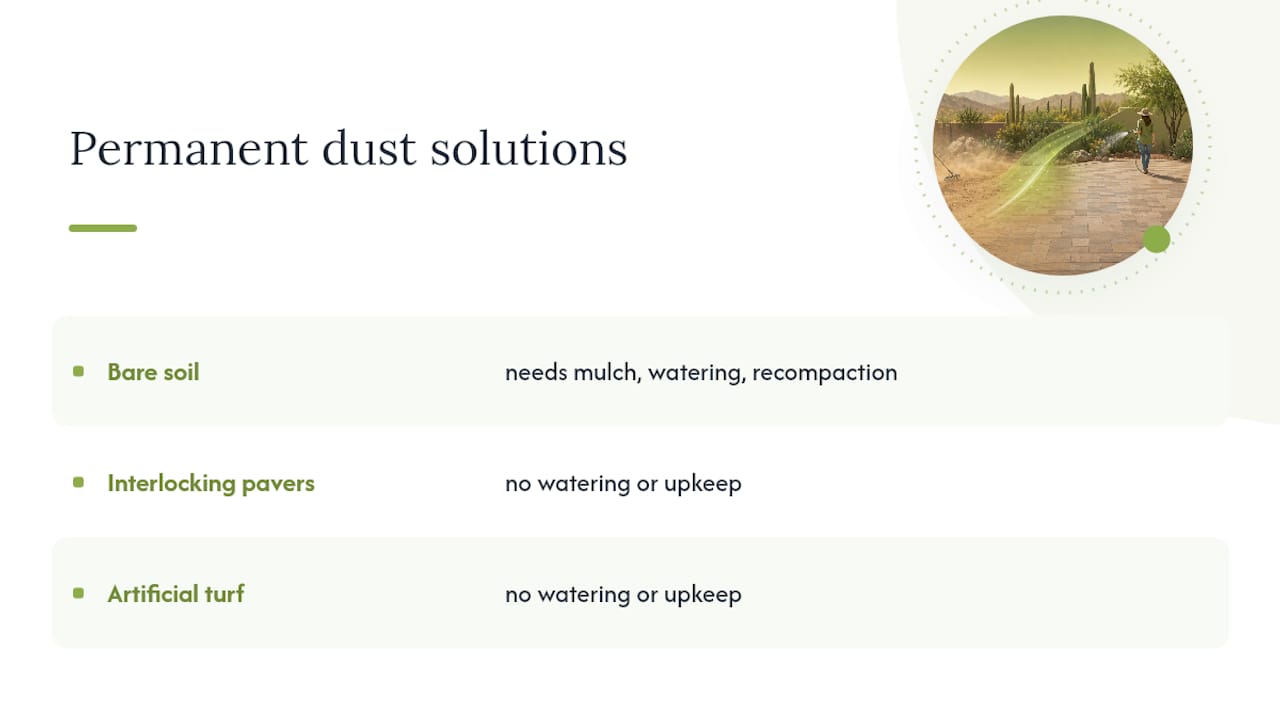
- Artificial turf. Removes the dust source entirely once installed. Higher upfront cost but essentially zero dust maintenance afterward, a strong fit for Southern Arizona’s dry climate where real grass struggles anyway.
- Pavers. Interlocking pavers eliminate loose soil on patios, walkways, and driveways for good. Highest upfront investment among these options, but virtually maintenance-free for dust control specifically.
- Hygroscopic salts (calcium or magnesium chloride). Pull moisture from the air to keep surface fines damp. Effective in moderate humidity, less so in very arid regions, and they carry real corrosion and plant-damage risks covered in detail below.
- Watering. Light, frequent applications suppress airborne dust without turning your yard to mud, and cost is just your water bill.
- Windbreaks. Fences, hedges, or even a row of potted shrubs slow wind before it lifts dust off any surface, permanent or not.
A hierarchy of control recommended by NIOSH puts things in useful order: minimize the dust source first with permanent cover, then prevent airborne particles with moisture or binders, then capture whatever’s left with windbreaks and screens. Homeowners who skip straight to spraying water on bare dirt are working the hardest step first.
Choosing Between a Quick Fix and a Permanent Fix
Run through five questions before you buy a single bag of mulch or call a contractor:
- What’s your budget window: under $200 for a weekend fix, or a few thousand for hardscaping?
- How long do you need this to hold, one season or ten years?
- How much ongoing maintenance are you honestly willing to do?
- Do kids or pets use this space daily, and does the surface need to handle that traffic?
- How reliable is your water access for the watering schedule a temporary fix requires?
Temporary fixes (mulch, straw, watering) run cheap and fast but demand monthly attention. Semi-permanent options (gravel, compacted decomposed granite) sit in the middle: moderate cost, yearly upkeep, five-plus year lifespan. Permanent installations (pavers, turf) cost the most upfront but need almost no dust-specific maintenance for a decade or longer.
Red flag: if your yard sits in a wind tunnel between two buildings, or borders an undeveloped lot that stays bare dirt, temporary fixes will fail repeatedly no matter how often you reapply them. That’s a sign to skip straight to permanent cover and a windbreak.
Your Weekend Dust Control Action Plan
- Walk the yard and map the problem. Note which direction wind typically comes from and which patches of soil are fully exposed.
- Clean and grade. Rake debris and level any low spots that pool water or channel wind.
- Lay landscape fabric over bare soil areas you’re covering.
- Spread 2 to 4 inches of wood chips or mulch on planting beds and unused dirt patches; use gravel for walkways or high-traffic zones instead.
- Position potted shrubs or a temporary screen on the windward side as an instant windbreak.
- Set a watering schedule, light applications every day or two rather than a heavy soak once a week.
Materials checklist: a small yard (under 1,000 square feet) needs roughly 3 to 4 cubic yards of mulch or 4 to 5 tons of gravel; a medium yard (1,000 to 3,000 square feet) needs 8 to 12 cubic yards or 10 to 15 tons; a large yard runs higher based on coverage area.
Pro Tip: Water in the early morning before wind picks up. You’ll use less water for the same dust suppression, since evaporation hasn’t kicked in yet and the ground stays damp longer.
Watering and Salt Treatments: What Actually Works
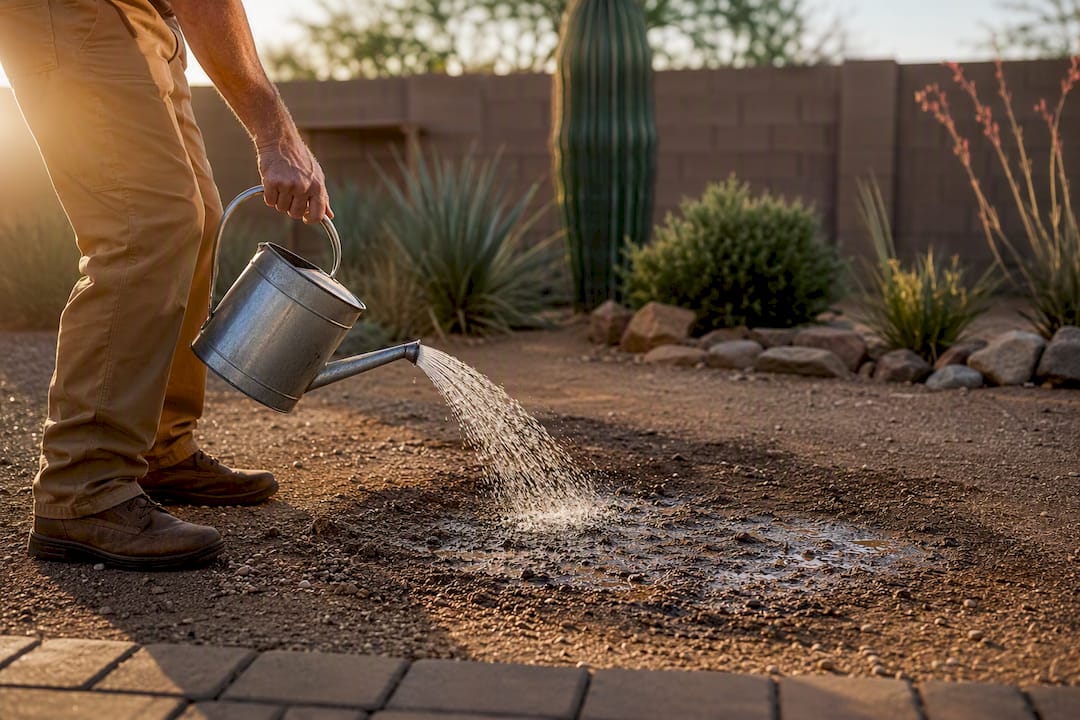
Light, frequent watering suppresses dust better than heavy infrequent soaking, because it keeps particles adhered to the surface without saturating the ground and causing runoff. Aim for short daily or every-other-day watering sessions rather than one long weekly session.
- Increasing surface moisture by just 1 to 3 percent can cut peak dust levels by a meaningful margin, according to a review of dust suppression techniques for aggregate surfaces.
- Calcium and magnesium chloride work by pulling moisture from the air to keep soil fines hydrated, but they lose effectiveness in very arid climates where there’s little ambient humidity to draw from.
- These salts can corrode metal fencing, gates, and outdoor fixtures, and they can damage nearby plants if concentrations run too high.
- Keep salt applications away from storm drains and concrete, both of which suffer long-term damage from repeated exposure, and keep pets off treated ground until it’s fully dry.
Vehicle speed matters more than most homeowners realize. On unpaved driveways or side yards, cutting vehicle speed substantially, for example halving typical speeds, can reduce dust emissions significantly, potentially by a large fraction… If a shared driveway or alley kicks up dust into your yard, a speed bump or simple “slow down” sign does more than another round of watering.
Permanent Fixes: Pavers, Turf, and When to Call a Pro
Permanent cover ends the dust problem at its source instead of managing it week to week. Once soil is sealed under pavers or turf, there’s no bare ground left for wind or foot traffic to lift into the air, which is why it sits at the top of the control hierarchy over spraying or salting.
- Interlocking pavers typically last 25 to 30 years with minimal upkeep beyond occasional joint-sand refills, and they handle patios, driveways, and pool decks equally well.
- Artificial turf lasts 15 to 20 years, eliminates watering almost entirely, and works well for yards where real grass never thrived in desert heat anyway.
- Travertine offers a natural stone look for patios and pool decks with similar durability to pavers, at a higher material cost.
A solid professional estimate should cover site prep and grading, material and labor costs broken out separately, drainage planning, and a written timeline. DIY gravel or mulch projects make sense for smaller areas and modest budgets; full paver or turf installations generally call for a contractor because base compaction and drainage mistakes are expensive to fix later.
Jackpot Landscaping has spent more than 15 years installing pavers, travertine, and artificial turf across Tucson and Southern Arizona, specifically for the desert conditions that make bare-soil dust such a persistent headache here. Homeowners considering that jump can browse recent paver and turf projects for a sense of what a finished, dust-free yard looks like.
Keeping Dust Away: Maintenance and Warning Signs
- Mulch and straw: top up annually, or sooner if you notice bare patches reappearing.
- Gravel: recompact high-traffic areas every 1 to 2 years.
- Pavers: refill joint sand every 2 to 3 years to keep fines from working loose underneath.
- Watering: stick to your light, frequent schedule; skipping it for two weeks undoes most of the progress.
Watch for these red flags: dust returning within days of treatment, a consistent wind tunnel effect between structures, or an adjacent lot that stays undeveloped and bare. Any of those means your current fix is fighting a losing battle, and something more permanent is worth pricing out. A quick seasonal walk-through each spring and fall, checking mulch depth, gravel compaction, and paver joints, catches most problems before they turn into a dusty patio again.
Get a Free Landscaping Quote in Tucson, AZ
If you’ve tried mulch, gravel, and a watering schedule and you’re still fighting dust every windy afternoon, that’s usually the sign bare soil needs to go for good. Jackpot Landscaping installs interlocking pavers and artificial turf throughout Tucson and Southern Arizona, both built specifically to handle desert conditions without the water bills or upkeep that real grass demands. A paver patio or turf lawn does not need mulch top-ups, recompaction, or a watering can. It just needs to be installed correctly once. Reach out for a project quote and see what a permanent fix looks like for your yard.
The Real Talk on Backyard Dust
Most advice on this topic treats watering and mulch as the whole solution, and that’s where homeowners get stuck in an expensive loop. You buy mulch, it breaks down, you buy more. You water daily, you go on vacation for a week, the dust comes right back. None of that is a failure on your part. It’s the nature of any fix that manages a symptom instead of removing the cause.
The uncomfortable truth is that bare soil in a windy, arid yard is never fully solved by anything you reapply. It’s solved by covering it once with something that doesn’t erode: gravel, turf, or pavers. I’d rather see a homeowner spend one weekend on mulch and windbreaks to buy time, then save toward a paver patio or turf lawn, than spend three years and several hundred dollars re-treating the same fifteen feet of dirt.
Start cheap, but plan permanent. That’s the sequence the evidence actually supports, not the other way around.
— Noah
Sources
For deeper guidance, see the Alaska Department of Environmental Conservation’s dust control techniques, the UNCCD’s toolbox on dust palliatives, and the NIOSH handbook on dust control hierarchy. For mulching techniques and other DIY landscaping how-tos, Ivan’s Landscaping blog is worth a look. Homeowners weighing professional installation can review Jackpot Landscaping’s full service list.
- Top Ten Dust Control Techniques List | AK Dept. of Environmental Conservation
- Dust palliatives and suppressants | UNCCD toolbox
- Controlling respirable dust on mining operations (NIOSH handbook excerpt)
- Review of dust suppression techniques for mineral aggregates (Aerosol and Air Quality Research)