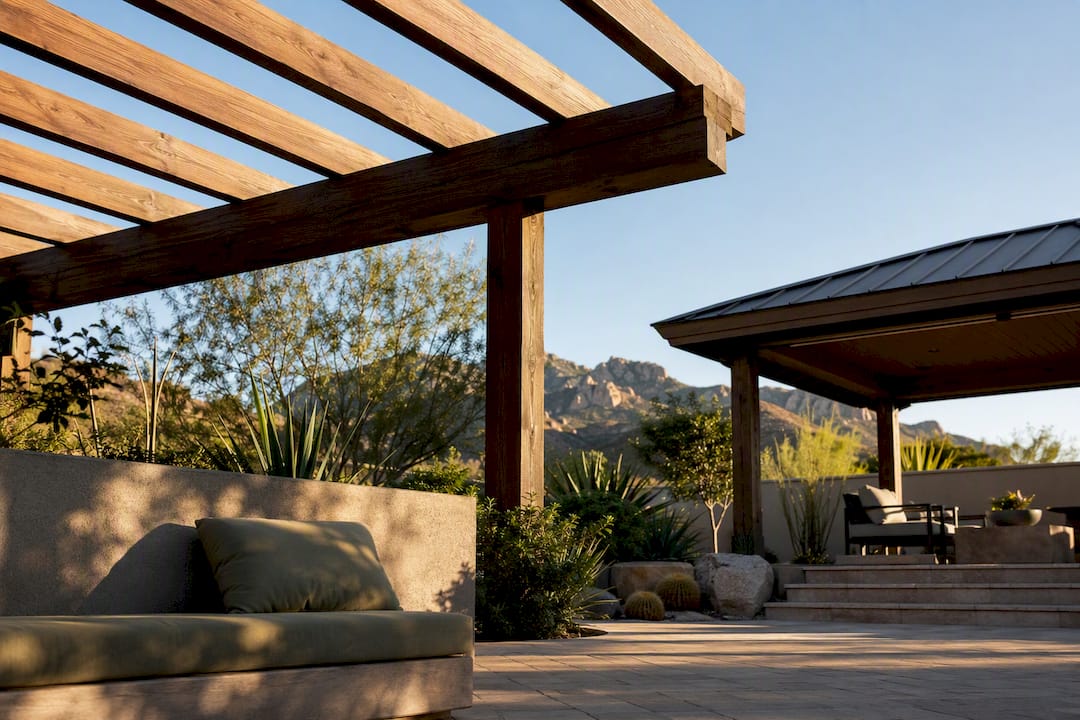
A gazebo has a solid roof built for full weather protection; a pergola has an open or slatted roof built for filtered shade and architectural style. If you want an all-weather outdoor room you can use rain or shine, choose a gazebo. If you want airy shade, room for climbing plants, and a lower price tag, choose a pergola.
TL;DR:
- Gazebos with solid roofs provide full weather protection, making them ideal for year-round outdoor use and accommodating features like ceiling fans or chandeliers.
- Pergolas with open or slatted roofs are less suitable for rain protection unless equipped with retractable covers, but they offer better airflow and are easier and cheaper to build DIY.
- The average cost of a gazebo is 30 to 60 percent higher than a pergola of comparable size, with maintenance requirements varying mainly by material choice.
- Vinyl and aluminum structures require minimal upkeep, while wood needs resealing every one to two years, and fabric covers need replacement every three to five years.
- For small yards or training climbing plants, pergolas promote a lighter, modern look, whereas gazebos serve as standalone focal structures in larger spaces or for weather-resistant outdoor rooms.
Table of Contents
- Pergola vs Gazebo: A Quick Feature Comparison
- Why the Roof Is the Real Difference Between Pergola and Gazebo
- Matching the Structure to How You’ll Actually Use the Yard
- What Pergolas and Gazebos Actually Cost to Build and Maintain
- Should You DIY It or Hire a Contractor?
- Your On-Site Checklist for Choosing Between the Two
- What 15 Years of Desert Installs Taught Us
- Ready to Build Yours? Here’s Where Jackpotlandscape Fits In
- Sources
Pergola vs Gazebo: A Quick Feature Comparison
Before you dig into the details, here’s how the two stack up side by side.
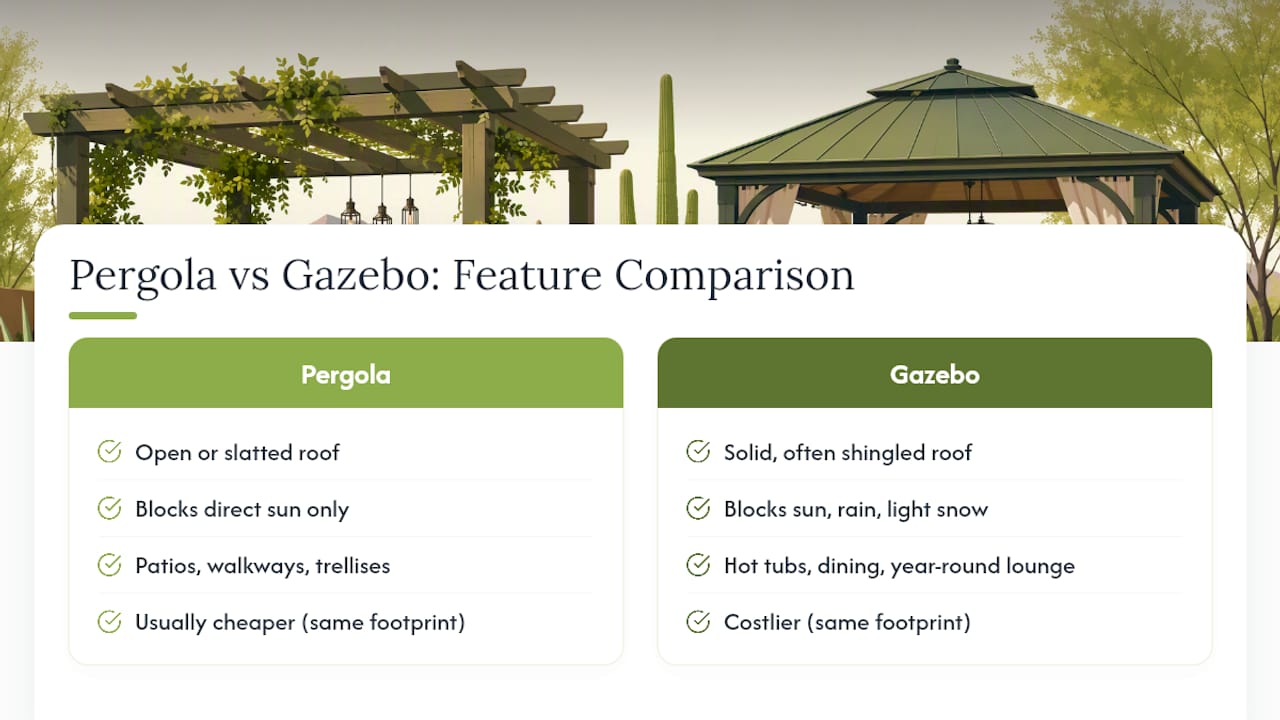
Roof type: Gazebo has a solid, often shingled roof. Pergola has an open or slatted roof.
Weather protection: Gazebo blocks sun, rain, and light snow. Pergola blocks direct sun only, unless you add a cover.
Typical uses: Gazebo suits hot tubs, dining nooks, and year-round lounging. Pergola suits patios, walkways, and plant trellises.
Cost range: Pergolas usually run cheaper than gazebos of the same footprint.
Maintenance: Gazebo roofing needs periodic inspection for leaks. Pergola upkeep depends mostly on the material of the posts and beams.
Airflow: Pergola wins here. Gazebo can trap heat without vents.
DIY friendliness: Pergola kits are simpler. Gazebo construction usually calls for roofing skills.
Mounting needs: Gazebo often wants a level pad or deck. Pergola can anchor to pavers, concrete, or a simple footing.
Why the Roof Is the Real Difference Between Pergola and Gazebo
The roof decides almost everything else about how you’ll actually use the structure. A gazebo’s solid roof keeps you dry in a downpour and shaded from noon sun without a second thought, and that same solid surface gives you a mounting point for string lights, a ceiling fan, or even a small chandelier if you’re building an outdoor dining room. The tradeoff: without ridge vents, gable openings, or a fan, heat gets trapped underneath, especially in summer.
A pergola’s open or slatted roof does the opposite job. It filters harsh sun and lets breeze pass through freely, but it does almost nothing for rain protection unless you add a canopy, retractable louvers, or a fabric cover. Louvered and retractable-canopy pergolas split the difference, giving you on-demand coverage when weather turns, though that flexibility adds cost and moving parts to maintain.
Pro Tip: If you go with a gazebo in a hot climate, ask your installer about a vented ridge cap or a small ceiling fan before you finish the project. It’s a lot cheaper to plan for airflow up front than to retrofit it later.
Low sun angle is the sneaky pergola problem nobody warns you about. Side glare in the late afternoon can wreck an otherwise perfect pergola setup, which is why roller shades and retractable screens mounted on the open sides are such a common add on.
Matching the Structure to How You’ll Actually Use the Yard
Designers often describe a gazebo as a destination and a pergola as a connector, and that distinction is genuinely useful when you’re standing in your yard trying to decide. A gazebo works as a standalone room you walk out to, while a pergola extends the space you’re already standing in.
Reach for a gazebo when:
- Rain shows up without much warning where you live
- You want to entertain outdoors year-round, not just in dry months
- You’re covering an outdoor kitchen or grill station that needs weather protection
- You want a clear focal point at the back of the yard
Reach for a pergola when:
- You’re framing a patio, walkway, or pool deck without blocking sightlines
- You want a lighter footprint that doesn’t dominate a smaller yard
- You’re training climbing plants like wisteria or grapevine, which need well-spaced uprights and beams to grow properly, per RHS pergola guidance
- You like the open, modern look over an enclosed structure
Footprint matters more than people expect. A gazebo’s solid roof and walls make it read as a separate structure, while a pergola tends to blend into the hardscape it sits on, whether that’s a paver patio or a travertine pool deck.
What Pergolas and Gazebos Actually Cost to Build and Maintain
Pergolas typically cost less than gazebos with a comparable footprint, and gazebos often run 30 to 60 percent more than a similarly sized pergola once you factor in roofing, framing, and finishing work. Kit versions of either structure cost far less than custom builds, but a louvered or motorized pergola can push past gazebo pricing entirely since you’re paying for the mechanism, not just the frame.
Material choice drives the maintenance conversation more than structure type does:
- Wood looks the best out of the box but needs resealing every year or two to fight sun and moisture damage.
- Aluminum and vinyl cost more upfront but need almost no upkeep beyond an occasional rinse.
- Composite splits the difference: pricier than wood, but far more resistant to cracking and fading over time.
If either structure uses a fabric canopy or shade cover, plan on replacing it roughly every three to five years depending on sun exposure. Intense, constant UV exposure will shorten that window considerably, which is worth factoring into your budget before you commit to a fabric-covered design.
Should You DIY It or Hire a Contractor?
Pergolas are the more forgiving DIY project because the open frame skips the roofing and flashing work that trips up first-timers. Gazebos, by contrast, need correct roof framing and waterproofing to avoid leaks down the road, which is a harder skill set to pick up over a weekend.
- Decide your foundation. A concrete slab lasts the longest under either structure; a wood deck mount works but shortens the lifespan of ground-contact posts.
- Check local setback rules. Many municipalities require a minimum distance from property lines for any permanent structure.
- Check height limits. Gazebos with pitched roofs are more likely to trip a height threshold than a low-profile pergola.
- Flag electrical or plumbing attachments. Adding a ceiling fan, lighting, or an outdoor kitchen hookup usually requires a permit regardless of structure type.
- Call a pro if roofing is involved. Watertight roofing is where DIY gazebo projects go wrong most often.
Your On-Site Checklist for Choosing Between the Two
Walk your yard with this list before you order anything:
- Define the primary use: dining, lounging, plant support, or pure shade
- Check your local climate pattern: frequent rain leans gazebo, dry heat leans pergola
- Measure the actual footprint, including clearance from fences and the house
- Set a firm budget range before you start shopping kits or contractors
- Pick a material based on how much upkeep you’re willing to do
- Decide honestly whether you’re building this yourself or hiring it out
- Sketch placement relative to your patio, pool, or existing pavers
If rain is a regular headache where you live, a gazebo earns its higher price. If you’ve got a small patio and want climbing plants trained overhead, a pergola wins. If you genuinely want both, a louvered pergola gets you close, at a premium.
Pro Tip: Measure twice before you commit to a footprint. A structure that looks right on paper can crowd a small patio once posts and roofline are actually standing in the yard.
What 15 Years of Desert Installs Taught Us
Experienced local installers have found that ventilation isn’t optional in this climate. A solid-roof gazebo without vents turns into an oven by July. Aluminum and vinyl outperform raw wood in our heat and UV, and pairing either structure with pavers or turf underneath solves the dust and glare problems that plain dirt or gravel create.
— Noah
Ready to Build Yours? Here’s Where Jackpotlandscape Fits In
Some landscaping companies offer custom pergolas and hardtop gazebos alongside paver patios, travertine decks, and turf installations, so the whole outdoor living space can be designed and installed as one project.
That matters most when you’re pairing a structure with a hardscape foundation, since a mismatched patio can undercut even a well-built gazebo or pergola. Browse our outdoor living space installations to see completed pergolas and gazebos paired with pavers and travertine across Tucson and Southern Arizona, or check out recent paver patio projects for a sense of how the foundation work gets handled. If you’re ready to discuss specifics, consider scheduling a site estimate to review your yard before purchasing materials.
Sources
- Pergola vs. Gazebo
- Gazebo vs Pergola
- Pergola vs. Gazebo: Which Shade Structure Is Right for Your Backyard?
- Pergola shade solutions: roller shades, canopies, and retractable screens