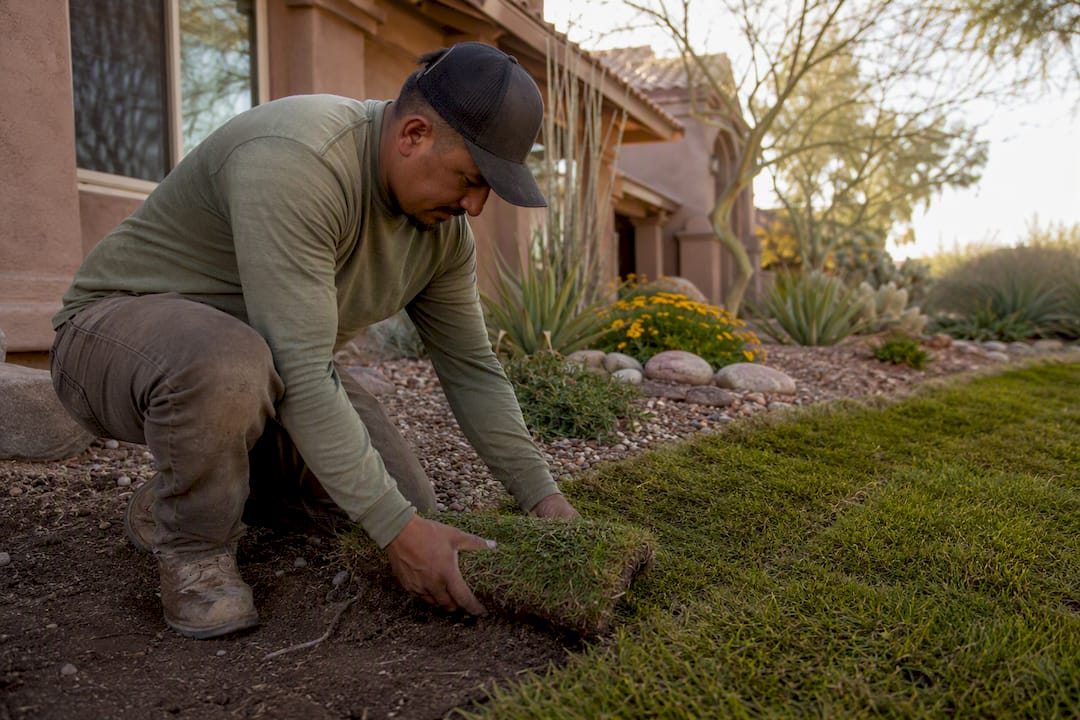
If you need a lawn fast, need to hold a slope together, or you’re putting in high-traffic turf for kids and dogs, lay sod. If you’re working with a tight budget, want more grass variety, or you’re not in a rush, seed wins on cost and long-term root strength. Most yards don’t need a purebred answer, either.
Three questions settle it faster than any spec sheet:
- Budget: Seed costs a fraction of sod per square foot.
- Timeline and slope: Sod is ready to use in weeks and stabilizes bare soil almost immediately.
- Use case: Heavy foot traffic, pets, or erosion-prone grades favor sod; patience and variety favor seed.
Both methods fail on bad soil. Skip the prep work and neither one holds up.
Key Takeaways
Sod delivers a usable lawn in two to three weeks and controls erosion immediately, while seed costs far less but demands months of patience and disciplined watering.
| Point | Details |
|---|---|
| Match method to timeline | Choose sod if you need a usable lawn within weeks; choose seed if you can wait two to four months. |
| Budget drives the choice for many | Seed runs roughly $0.07 to $0.23 per sq. ft. versus sod’s $1.70 to $2.60 per sq. ft. installed. |
| Soil prep decides success | Test soil and break up compacted subsoil before planting either sod or seed. |
| Watering commitment is non-negotiable | Sod needs daily watering for two weeks; seed needs light watering two to three times daily until germination. |
| Consider a hybrid or professional install | Sod the front yard for curb appeal, seed the back, or let Jackpotlandscape handle sod installation with proper soil prep across Tucson and Southern Arizona. |
Table of Contents
- Sod vs Seed Lawn: What Sod Actually Gives You
- Sod vs Seeding: What Growing From Scratch Involves
- How Much Does Sod vs Seed Cost?
- How Long Until the Lawn Is Usable?
- Soil Prep and the Best Months to Plant
- Installing Sod or Seed Step by Step
- Which Method Fits Your Yard?
- What Installers Watch For in Hot, Dry Climates
- What Actually Matters When You’re Comparing Sod and Seed
- Get a Sod Lawn Installed Right the First Time
- Sources
Sod vs Seed Lawn: What Sod Actually Gives You
Sod is turf grown at a farm, cut into rolls with soil and roots attached, then transplanted onto your prepared yard. You’re buying a finished product, not growing one from scratch.
Pros:
- Instant green cover, usable lawn in weeks instead of months
- Strong erosion control on slopes and bare patches right away
- Fewer early weed problems since the turf is already dense
- Fewer scheduling restrictions than seed
Cons:
- Costs more than seed per square foot
- Heavy, physical installation, often two people minimum for a full yard
- Limited to whatever species your local sod farms grow
- Poor site prep can trap roots between soil layers and stall growth entirely
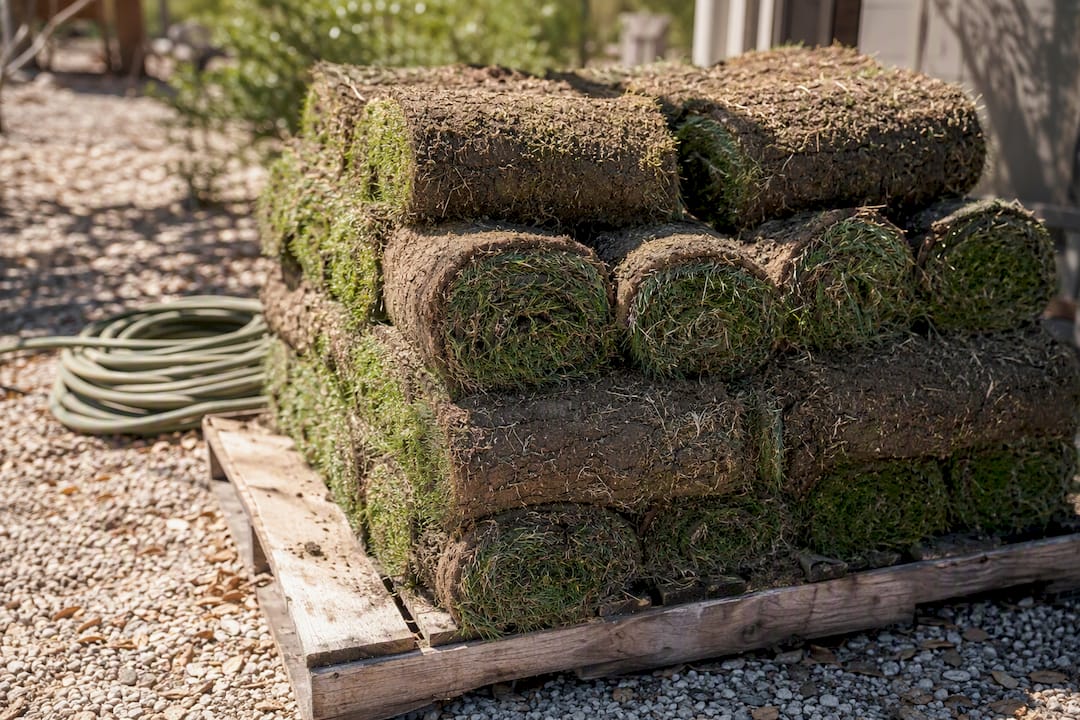
Sod is perishable. It should go down within about 24 hours of being cut, laid on lightly moistened soil with staggered seams.
Pro Tip: Order sod for delivery the same day you plan to install it. Rolls stacked on a pallet for more than a day can yellow and die before they ever touch soil.
Sod vs Seeding: What Growing From Scratch Involves
Seeding means spreading grass seed over prepared soil and letting it germinate and root where it lands. It’s the slower, cheaper route to the same destination.
Pros:
- Material cost is a small fraction of sod
- Far more species and blend choices, including options bred for shade or drought
- Deeper long-term root systems once established
- Easy to overseed later without tearing anything out
Cons:
- Weeks to months before the lawn is usable
- Narrow planting windows tied to grass type and climate
- More vulnerable to weeds and erosion while bare soil is still exposed
Species choice depends heavily on where you live. Cool-season grasses like fescue and bluegrass germinate best in late summer through fall, while warm-season grasses such as bermuda and zoysia need warm soil and go down in late spring. Check your USDA Plant Hardiness Zone before buying seed, since the wrong blend for your zone wastes both the seed and the season.
How Much Does Sod vs Seed Cost?
Seeded lawns typically run low cost per square foot for material and labor, while sod usually costs significantly more per square foot installed, according to LawnLove’s cost breakdown. Those are ballpark figures, not quotes, and your actual number moves with a handful of variables.
- Yard size and shape (irregular lots cost more per square foot to prep)
- How much grading, tilling, or amendment the soil needs before planting
- Delivery distance for sod, since freshness and freight both matter
- Local labor rates and whether you’re hiring installation or doing it yourself
- Premium seed blends or drought-resistant sod varieties
Small yards and tight budgets often make sense as a DIY seeding project. Larger properties, steep grades, or anywhere you can’t afford weeks of bare dirt usually justify getting on-site estimates from a professional installer, since freight, grading equipment, and labor scale fast on bigger jobs. A regional cost guide from GC Signature Outdoors offers another useful reference point for sod pricing by market.
How Long Until the Lawn Is Usable?
Sod is ready for light foot traffic in a few weeks. Seed typically takes several months before it can handle regular use, according to LawnLove’s timeline data, and that gap is the single biggest reason homeowners choose one method over the other.
- Sod: Water daily for the first one to two weeks, then taper to every other day as roots take hold.
- Seed: Water lightly two to three times a day to keep the top inch of soil consistently moist until germination, then reduce frequency as grass fills in.
For sod, run the tug test around week two: grab a handful and pull gently. If it resists and you feel resistance from new roots rather than the turf sliding free, it’s anchored. For seed, watch for uniform green fuzz across the bed, not just patches, before you ease off watering. Mow sod once it’s rooted and reaches mowing height, usually within two to three weeks. Hold off mowing seed until it’s at least three inches tall, and skip fertilizer on both until the first mow is behind you.
Soil Prep and the Best Months to Plant
Neither method survives bad soil, and skipping a soil test is the most common reason a new lawn fails in year one. University extension guidance recommends testing pH and organic matter, then following the amendment prescription before you sow or lay a single roll.
- Test soil pH and organic matter; add compost or lime/sulfur as recommended
- Grade the yard so water flows away from the house, not toward it
- Break up compacted subsoil, since compacted layers block root penetration for sod just as badly as for seed
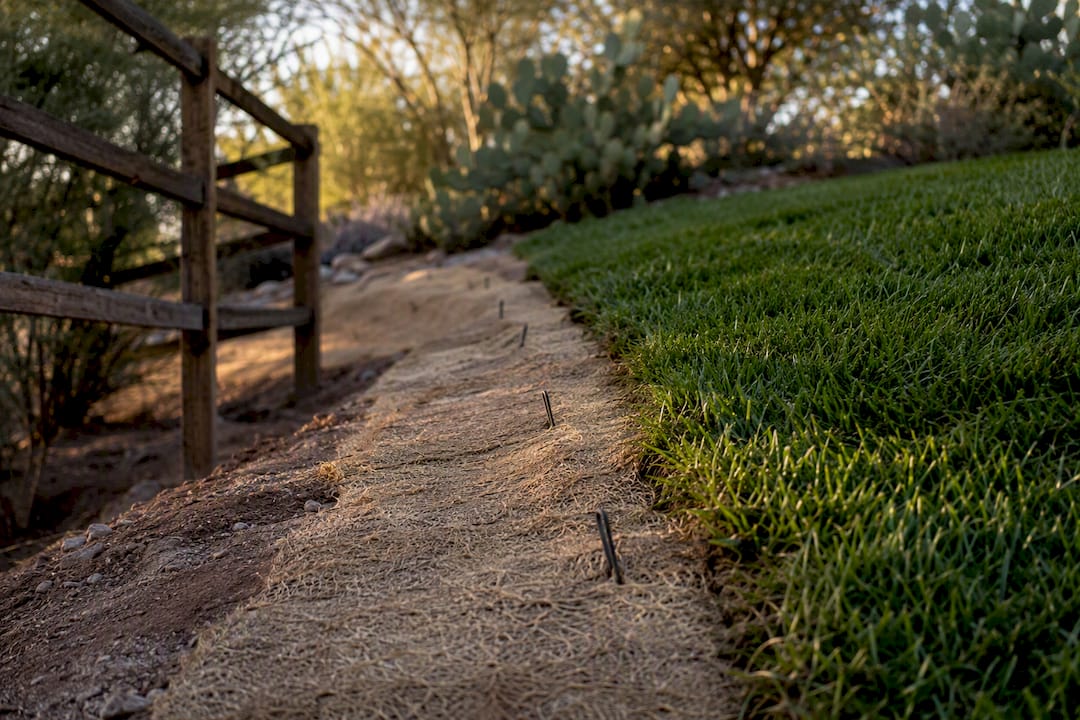
Cool-season grasses go down best in early fall; warm-season grasses prefer late spring once soil has warmed. On slopes, stake sod rolls across the grade rather than up and down, and fill any gaps between rolls so edges don’t dry out. Steep or runoff-prone sites are often bad candidates for seeding altogether, since a hard rain before germination can wash the whole bed away.
Pro Tip: If your yard slopes toward a fence line or neighbor’s property, sod with staked rolls controls erosion the same day it’s installed. Seed on that same slope needs erosion blankets or it washes out before it ever roots.
Installing Sod or Seed Step by Step
Seeding:
- Clear debris and till the top few inches of soil.
- Amend based on your soil test results.
- Grade smooth and rake to a fine, level bed.
- Spread seed at the recommended rate for your species.
- Lightly rake seed into the top quarter inch of soil.
- Water immediately and keep the surface consistently moist.
Sodding:
- Clear, till, and grade the site.
- Amend and break up compacted subsoil.
- Moisten the soil lightly right before laying.
- Lay rolls in a staggered brick pattern, tight seams.
- Roll the entire area to press roots into contact with soil.
- Water thoroughly and daily for the first two weeks.
Watch for patchy germination or yellowing sod in the first month, both signs of watering or soil contact problems. Steep slopes, major regrading, tight installation windows, or an irrigation overhaul are good reasons to bring in a professional sod installer rather than tackle it solo.
Which Method Fits Your Yard?
Run through these questions before you commit to either method:
- Is your timeline measured in weeks or months?
- Do you have a slope or bare patch at risk of washing out?
- Will kids or pets be using the lawn within a month of installation?
- Is your budget tight enough that a few hundred dollars in seed beats a few thousand in sod?
- Do you need a specific drought-tolerant or shade-loving variety only available as seed?
- Can you commit to watering twice a day for several weeks straight?
- Is curb appeal in the front yard a priority while the backyard can wait?
If your answers split, a hybrid approach often makes the most financial sense. Many homeowners sod the front yard for instant curb appeal and erosion control near the street, then seed the larger backyard where nobody’s judging the lawn for the first few months. That split can save real money on a big lot while still giving you a finished look where visitors see it first. It also lets you experiment with seed varieties in the backyard without gambling on the whole property.
What Installers Watch For in Hot, Dry Climates
Professional installers spend more time on irrigation planning than almost anything else, because a lawn that looks perfect on installation day fails within a month if watering isn’t dialed in. Soil amendment and species selection matter just as much in low-humidity climates, where the margin for error on watering shrinks fast.
- Ask any installer about warranty terms and what soil prep is included before you sign
- Confirm they test and break up compacted subsoil, not just till the top layer
- Budget water use carefully. In hot, low-rainfall regions, a live lawn’s ongoing water cost can outweigh the upfront installation savings of seed.
In some desert yards, artificial turf or hardscape ends up the more sensible long-term call than either sod or seed once you factor in year-round water bills.
What Actually Matters When You’re Comparing Sod and Seed
Most sod vs seed content treats this like a coin flip between two roughly equal options. It isn’t. The deciding factor for the vast majority of homeowners isn’t cost or even timeline, it’s whether you can actually deliver the watering commitment each method demands.
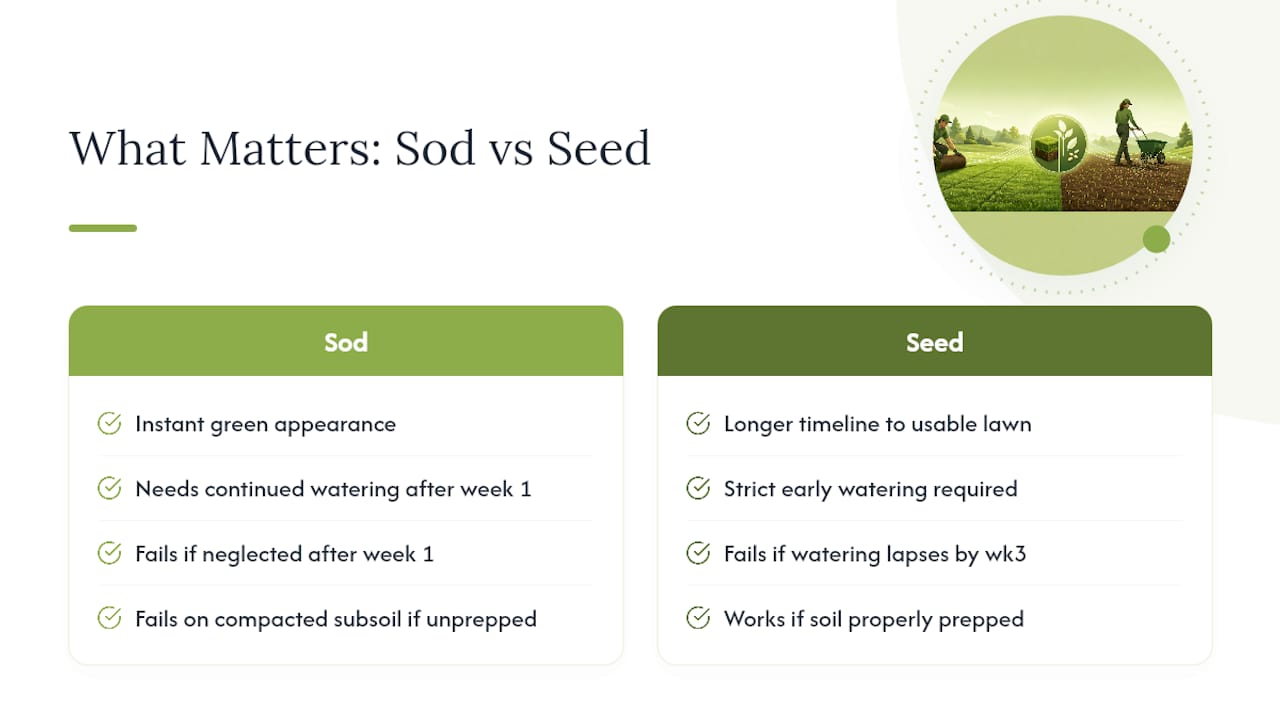
Seed’s biggest failure point isn’t the seed itself, it’s homeowners who nail the first week of watering and then get lazy by week three, right when the roots are most vulnerable. Sod fails for the opposite reason: people assume instant green means instant done, then under water it after the first week and watch $2,000 worth of turf go brown. The method matters less than your own follow-through.
If I had to push back on one piece of conventional wisdom, it’s the idea that sod is always the “safe” choice because it’s already grown. Sod on bad soil, especially compacted subsoil that never gets broken up, fails just as often as neglected seed, just more expensively. Soil prep isn’t a footnote in this decision. It’s the actual decision. Get that right and either method works.
Get a Sod Lawn Installed Right the First Time
Reading about sod prep is one thing. Getting compacted subsoil broken up, grading corrected, and rolls laid within hours of harvest is another, and it’s where most DIY lawns actually go wrong. Jackpotlandscape installs fresh sod lawns across Tucson and Southern Arizona with the soil work done properly up front, so you skip the trial-and-error and get a lawn that roots the first time.

We also install artificial turf and paver hardscape for yards where a live lawn’s water bill doesn’t pencil out long term, which is common across our desert climate. If you’re weighing sod against a lower-water alternative, we can walk your property and tell you honestly which option fits your budget and how you use the space. Start with a look at our sod installation services or browse recent projects to see finished results before you request a quote.
Sources
- Grass Seed vs. Sod: What’s Best for Your Lawn? | LawnLove
- Sod or seed: Find out which one is better | The Spruce
- ANR Publication — turf/establishment guidance | UC ANR
- USDA Plant Hardiness Zone Map