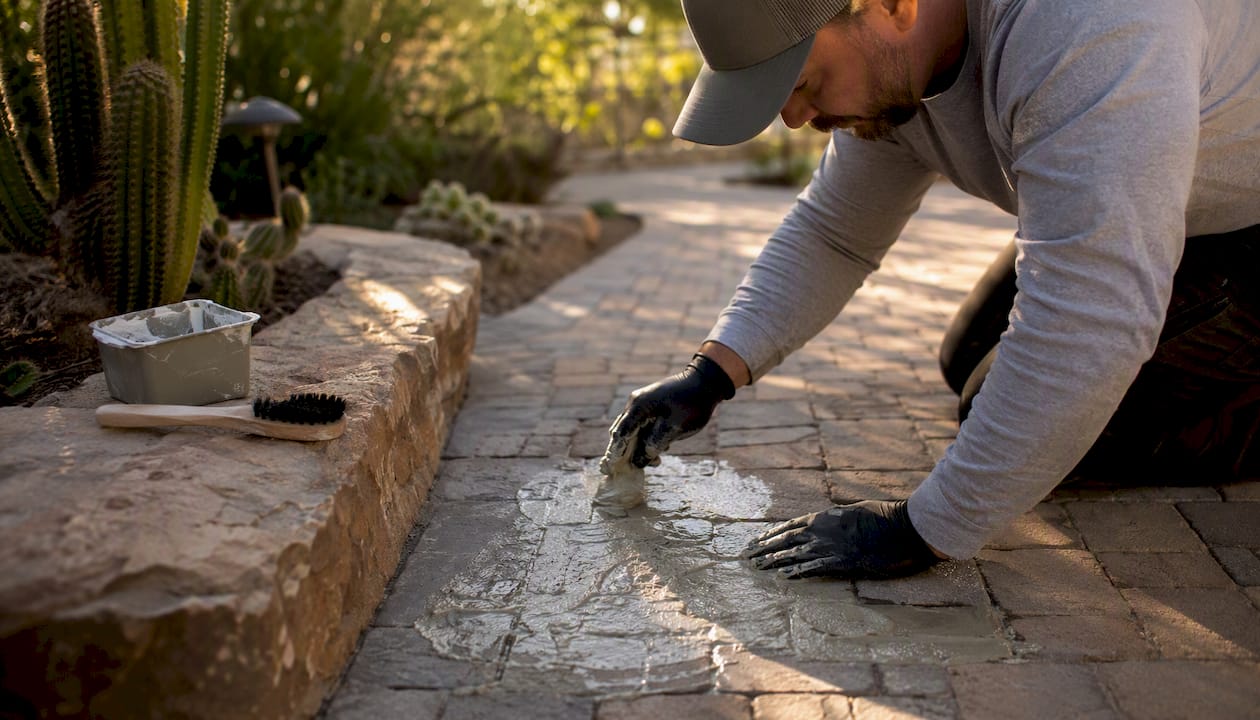
Match the method to the stain’s age: absorbent and dish soap for anything under 24 hours, a commercial degreaser for stains a few days to a week old, and a poultice for anything that has soaked in for more than a week. Guessing at this order wastes time and, on stone or colored pavers, can leave a lighter patch that looks worse than the original stain.
Here’s the quick map:
- Fresh (under 24 hours): Blot with an absorbent, then scrub with dish soap.
- Mid-age (2 to 7 days): Apply a commercial degreaser and let it sit for the label’s dwell time.
- Old or deep-set (over a week): Use a poultice to pull oil out of the paver’s pores.
Pro Tip: Before you touch any product to a visible area, test it on a hidden corner and cover nearby plants or grass. Runoff carrying oil or degreaser into soil or storm drains can kill vegetation and, in some municipalities, violate local water regulations.
Key Takeaways
Matching the removal method to the stain’s exact age, fresh, mid-age, or deep-set, is what determines whether a paver cleanup actually works.
| Point | Details |
|---|---|
| Match method to stain age | Fresh spills need absorbent and dish soap; older stains need degreaser or a poultice. |
| Respect dwell times | Rinsing or scrubbing too early is a common reason DIY treatments fail. |
| Test before full application | Hidden test patches prevent discoloration on stone, brick, and colored pavers. |
| Poultices need patience | Deep, old stains often require two or three poultice applications to fully clear. |
| Know when to call in help | Jackpotlandscape repairs, reseals, or replaces pavers when stains are permanent. |
Table of Contents
- Removing Oil Stains From Pavers: A Step-by-Step Checklist
- Which Products Actually Remove Oil From Pavers?
- Do Poultices Really Pull Oil Out of Pavers?
- Which Paver Materials Need Extra Care Before Cleaning?
- When Should You Call a Landscaping Professional?
- How Do You Stop Oil Stains Before They Start?
- What If the Stain Won’t Come Out?
- Frequently Asked Questions
- Sources
Removing Oil Stains From Pavers: A Step-by-Step Checklist
Start by identifying two things: how old the stain is and what your pavers are made of. That combination decides your entire approach.
What you’ll need:
- Absorbent material (cat litter, cornstarch, or baking soda)
- Dawn-style dish soap and a stiff nylon brush (never wire)
- A commercial degreaser rated for pavers
- Poultice powder or a premixed poultice product (for older stains)
- Garden hose or a pressure washer set to low PSI
- Rubber gloves and eye protection
For a fresh spill:
- Cover the stain immediately with cat litter, cornstarch, or baking soda and let it sit for 15 to 20 minutes to soak up surface oil.
- Sweep away the absorbent and dispose of it in the trash, not down a drain.
- Scrub the area with dish soap and warm water using a stiff nylon brush.
- Rinse thoroughly with a garden hose and let the pavers dry completely before judging the result.
For a mid-age stain:
- Apply a commercial degreaser according to the label’s dilution instructions.
- Let it dwell for the recommended time, typically 5 to 15 minutes for surface degreasers, though times vary by product.
- Agitate with a nylon brush, then rinse completely.
- Check the pavers once fully dry. Wet concrete often looks cleaner than it actually is.
Never let a degreaser dry on the surface. That’s a common reason people report a cleanup “failing” when the product simply needed a second rinse or a longer dwell before judgment.
Pro Tip: If a stain lightens but doesn’t disappear on the first try, repeat the treatment rather than reaching for something stronger. Two mild passes usually beat one aggressive one, especially on colored or sealed pavers.
Which Products Actually Remove Oil From Pavers?
Four names come up again and again among professionals dealing with paver oil stain removal, and each one fits a slightly different job.
- PROSOCO Cleaner/Degreaser strips surface oil first and often reveals how deep a stain really goes, which the manufacturer frames as step one before poulticing anything stubborn.
- Sika Oil Remover is a ready-to-use spray built for oil, gasoline, and diesel on standard paving materials, and Sika’s own guidance says to test colored or decorative pavers first.
- Surebond Oil Extractor is a biodegradable, ready-to-use spot cleaner that dissolves and encapsulates oil so it rinses away rather than smearing.
- Techniseal Pro-Grade Oil & Grease Remover is an industrial-strength formula that dries from liquid to a powder for easy sweep-up, and it holds up on natural stone as well as concrete.
| Product | Best For | Surface Compatibility | Application | Dwell Time | Discoloration Risk | Rinse |
|---|---|---|---|---|---|---|
| PROSOCO Cleaner/Degreaser | Mid-age to deep, sets up poultice step | Concrete, most hardscape | Dilute per label | Varies by stain severity | Low if tested first | Rinse thoroughly with water |
| Sika Oil Remover | Fresh to mid-age spills | Concrete, standard pavers | Ready-to-use spray | Do not let dry on surface | Test colored/decorative pavers | Rinse thoroughly |
| Surebond Oil Extractor | Fresh to mid-age, sensitive surfaces | Most surfaces, caution on sealed/wet-cast | Ready-to-use | Follow label instructions | Test sensitive surfaces first | Rinses clean |
| Techniseal Pro-Grade Remover | Deep, embedded petroleum stains | Concrete pavers, natural stone | Apply per label | Until dry to powder | Low on tested surfaces | Sweep off dried residue |
Always run a small hidden test patch before full application, and never assume two products behave the same on sealed pavers just because they’re both labeled “oil remover.”
Do Poultices Really Pull Oil Out of Pavers?
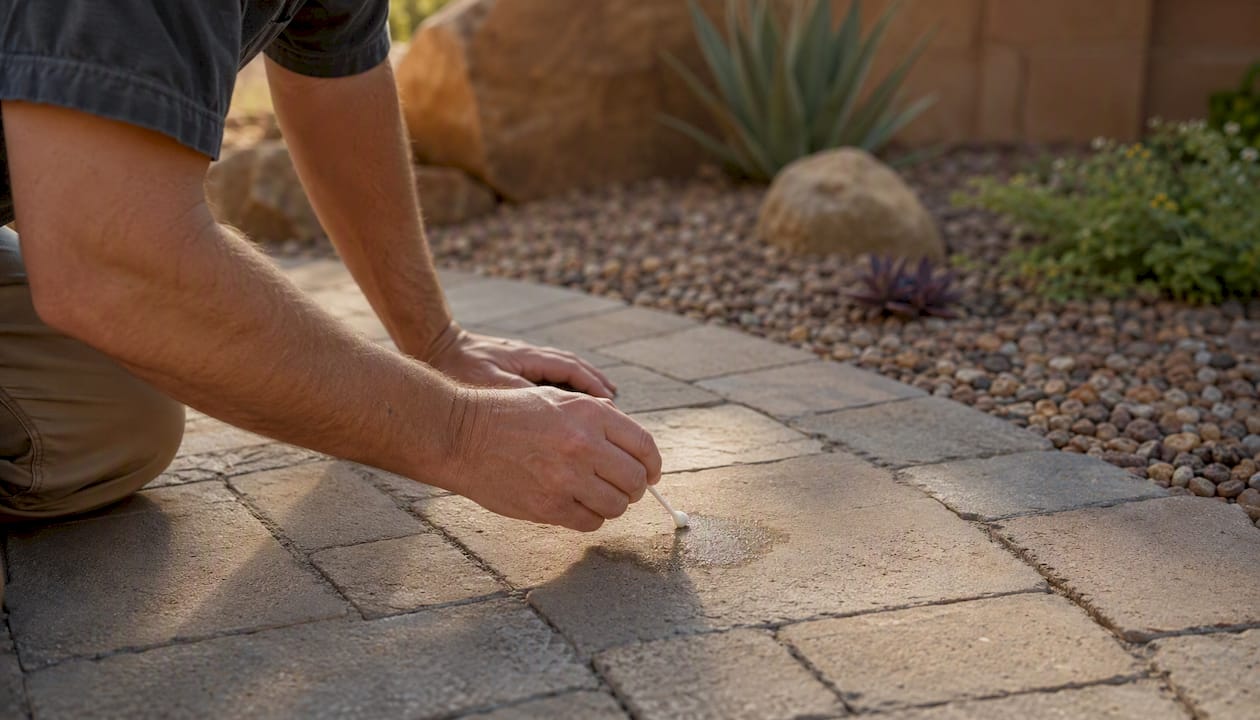
Yes, and that’s exactly why they outperform detergents on stains that have had time to soak deep into porous concrete or stone. A poultice is a thick paste, usually powder mixed with a solvent, that you spread over the stain and let dry. As it dries, capillary action pulls the oil out of the paver’s pores and into the poultice material instead of just cleaning the surface.
How to apply one:
- Mix the poultice powder with the manufacturer’s recommended liquid until it forms a thick, peanut-butter-like paste.
- Spread it about a quarter-inch thick over the stain, extending an inch beyond the visible edges.
- Cover with plastic sheeting and tape the edges down. Tenting slows the drying process, which gives the poultice more time to draw oil upward.
- Remove the plastic after the recommended dwell, often 5 to 8 hours, and let the poultice finish drying and cracking on its own.
- Sweep away the dried, cracked poultice and rinse the area.
Pro Tip: Very old stains often need two or three poultice applications. Don’t judge success after round one. Sweep, rinse, inspect once dry, and repeat if a faint shadow remains.
Which Paver Materials Need Extra Care Before Cleaning?
Not every paver reacts the same way to the same cleaner, and this is where a lot of DIY cleanups go sideways.
- Test patch first: Pick a hidden spot, follow the label’s exact dilution and dwell time, and wait 24 to 48 hours before judging the result.
- Concrete pavers: Generally the most forgiving surface for degreasers and poultices.
- Brick: Porous like concrete, but colors can shift with aggressive chemicals, so test first.
- Natural stone (travertine, limestone, sandstone): Avoid acidic cleaners entirely; they etch the surface permanently.
- Porcelain and wet-cast pavers: More sensitive to solvents; Surebond and Sika both flag these as surfaces to test carefully.
- Tools to avoid: wire brushes, which scratch soft stone, and high-pressure washing, which can blow out joint sand or etch soft surfaces.
Manufacturer datasheets exist for a reason. A dilution ratio that’s safe on standard gray concrete can discolor a tumbled travertine paver in minutes.
When Should You Call a Landscaping Professional?
Some stains just aren’t a weekend project, and knowing the line matters more than owning every product on the shelf.
Call a pro if:
- The stained area covers more than a few square feet.
- The stain is older than a few weeks and multiple poultice attempts haven’t worked.
- Your pavers are natural stone, porcelain, or a sensitive color.
- You’ve already tried two or three DIY rounds without improvement.
- You notice joint sand washing out or pavers shifting during cleanup.
What professionals typically do differently:
- Use industrial-grade poultices with longer or heated dwell times.
- Run controlled, low-pressure washing calibrated to the paver material.
- Reseal the area after cleaning to prevent the stain from recurring.
- Replace individual stained pavers when the oil has permanently discolored the material.
Before hiring anyone, ask about their experience with your specific paver type, how they handle runoff disposal, and whether they can show before-and-after photos of similar jobs.
How Do You Stop Oil Stains Before They Start?
Sealing is the single biggest lever here. A penetrating paver sealer fills the surface pores so oil sits on top long enough for you to wipe it up instead of soaking straight in. Most sealers need reapplication every two to three years depending on traffic and sun exposure.
- Park on a drip tray or rubber mat if a vehicle leaks even occasionally.
- Use a grill mat under any grill or smoker sitting on pavers.
- Blot fresh spills with an absorbent the moment you notice them, before they set.
- Clean pavers gently on a regular schedule rather than waiting for a stain to build up.
Sealed pavers also cut your cleanup time down to a quick wipe in most cases, instead of a full degreaser-and-poultice cycle.
An Installer’s View on DIY Oil Stain Removal
Most homeowners reach for a pressure washer or a harsh chemical before trying the simplest fix first, and that’s usually what turns a fixable stain into a permanent one. Follow the age-based order and be patient with dwell times. If a stain has eaten into the stone itself, no product brings that back. Replacement is the only honest fix at that point.
What If the Stain Won’t Come Out?
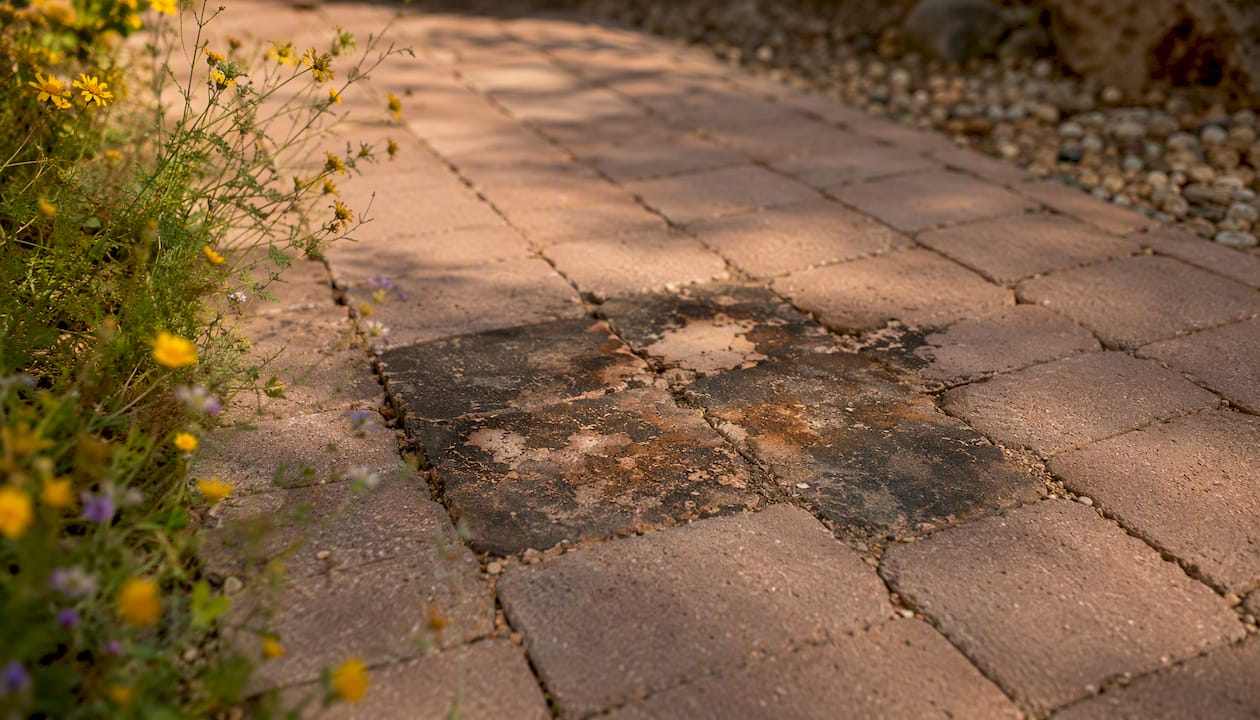
Some oil stains have been baking into concrete or stone for years, and no amount of poultice will fully lift them. That’s not a DIY failure. It’s just physics. Jackpotlandscape handles paver repair, selective replacement, and resealing across Tucson and Southern Arizona for exactly these cases, when a stain has gone from cosmetic to structural or when a homeowner would rather swap a few pavers than fight a shadow that keeps coming back.

We can match existing pavers, reseat and reseal an entire section, or reset a driveway with fresh material if a large area is affected. If you want to see what that kind of work actually looks like before you commit to anything, browse our paver installation and repair services or check out completed jobs in our project gallery. Request an assessment and we’ll tell you honestly whether your pavers need a deep clean or a fresh install.
Frequently Asked Questions
Does dish soap actually remove oil stains from pavers? Dish soap works well on fresh oil, typically under 24 hours old, because the stain hasn’t had time to soak into the paver’s pores. For anything older, you’ll need a commercial degreaser or poultice instead.
Can I use WD-40 or a similar spray to clean oil off pavers? No. Penetrating oils can temporarily loosen surface grease but risk adding more oil into porous concrete or stone, which often makes staining worse over time.
Will a pressure washer remove old oil stains? High pressure alone rarely lifts embedded oil and can blow out joint sand or etch soft stone. Use low PSI settings paired with a degreaser or poultice rather than pressure alone.
How long should a poultice sit on a paver stain? Most poultice products need several hours to dry and pull oil out, though very old stains may need two or three separate applications before the stain fully disappears.
Do sealed pavers still get oil stains? Sealed pavers resist staining because oil sits on the surface instead of soaking in, giving you time to wipe it up. Unsealed pavers absorb oil almost immediately, which is why sealing is one of the most effective prevention steps available.
Sources
- How to Remove Oil Stains From Pavers (Driveway & Patio) – PROSOCO
- Oil Extractor Oil Stain Cleaner
- Sika® Oil Remover
- Pro-Grade Oil & Grease Stain Remover | Techniseal