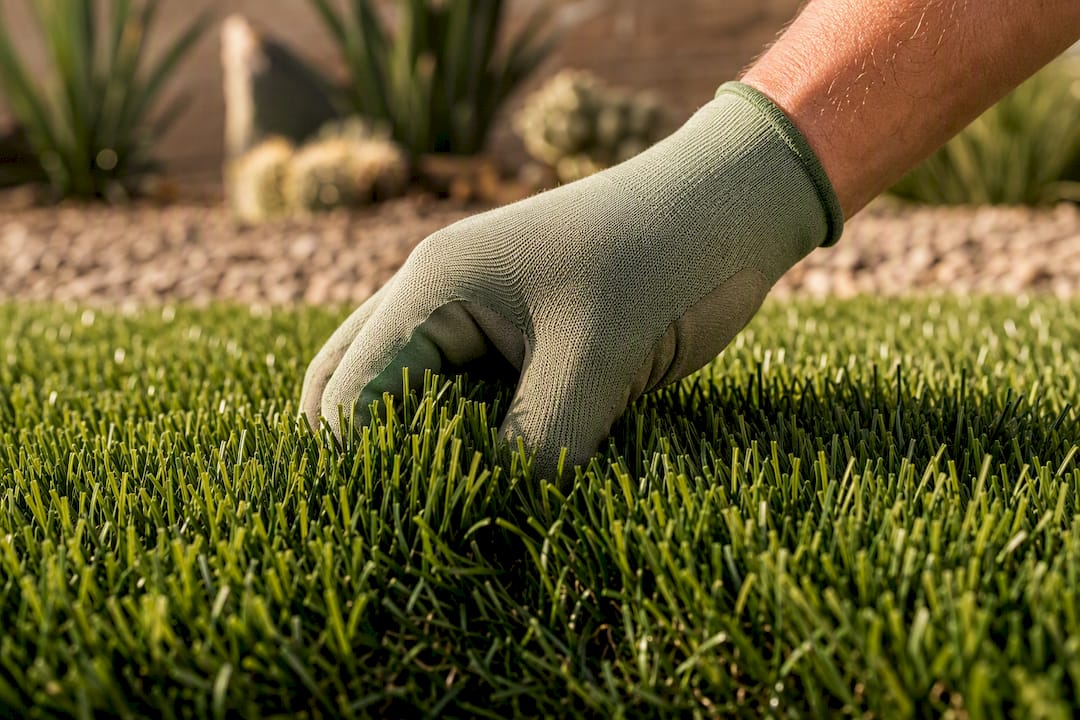
Pile height is the measured length of turf fiber from the backing to the blade tip, and it’s the single spec most homeowners fixate on when it shouldn’t be the only one. For most yards, 1.25 to 1.5 inches (30 to 35 mm) hits the balance between a lush look and a lawn that bounces back from foot traffic and furniture. Go shorter if you have dogs or heavy use, longer only if the area is a low-traffic showpiece.
TL;DR:
- Turf with a pile height of 1.25 to 1.5 inches provides a good balance between appearance and durability for most residential lawns.
- Shorter piles under 25 mm are better suited for high-traffic areas, while longer piles over 35 mm are primarily for decorative, low-use zones.
- Face weight and fiber density are more important than height alone for resisting matting and ensuring long-term performance.
- Proper installation, including accurate infill depth measurement, is essential for maintaining turf quality and avoiding common issues like uneven surfaces.
- Maintenance effort increases with pile height, with taller fibers needing more frequent grooming and debris removal to keep blades upright.
Table of Contents
- What Turf Pile Height Actually Measures
- What Do Short, Medium, and Long Pile Heights Look Like?
- How Do You Choose Pile Height by Use Case?
- Why Pile Height Alone Doesn’t Guarantee Quality
- How Do You Measure Pile Height and Set Infill Correctly?
- Caring for Turf Based on Its Pile Height
- An Installer’s Take on Where Homeowners Go Wrong
- Get Pile Height Right the First Time With Professional Installation
- Sources
- FAQ
What Turf Pile Height Actually Measures
Pile height is measured from the top of the backing material to the tip of the blade, expressed in millimeters or inches depending on the manufacturer. Most spec sheets list it in millimeters, so it helps to know the rough conversions: 25 mm is about 1 inch, 35 mm is about 1.4 inches, and 45 mm is about 1.75 inches.
Buyers frequently confuse three separate measurements that all sound alike:
- Pile height (or pile depth): the fiber length itself, unstretched and untouched by infill.
- Backing thickness: the base material the fibers are tufted into, usually just a few millimeters and not part of the pile height number.
- Infill depth: how deep the sand or rubber granules sit once installed, which is always shorter than the pile height itself.
Reading a spec sheet correctly means checking pile height alongside stitch rate, since a higher stitch rate can compensate for slightly shorter fiber by packing more tufts into the same square footage.
What Do Short, Medium, and Long Pile Heights Look Like?
Turf generally falls into three bands, and each one changes both the feel underfoot and the maintenance you’ll sign up for.
- Short pile (about 10 to 25 mm / 0.4 to 1.0 in): dense, low profile, and built for commercial or high-traffic zones where recovery matters more than plushness.
- Medium pile (about 25 to 35 mm / 1.0 to 1.4 in): the most common choice for residential lawns, because it looks like healthy natural grass without matting down under regular use.
- Long pile (35 mm and up / 1.4 to 3.0 in): a luxury, deep-green look best suited to accent areas with light foot traffic, since taller blades take longer to spring back after being crushed.
If a supplier only lists metric numbers, remember that every 25 mm adds roughly an inch. A 40 mm turf is close to 1.6 inches, which lands right at the upper edge of what most installers consider practical for everyday yards.
How Do You Choose Pile Height by Use Case?
Matching height to function beats picking based on the swatch that looks best in a showroom. Here’s how that plays out across the situations homeowners actually deal with:
- Standard residential lawns: Stick to 1.25 to 1.5 inches. It’s tall enough to look full and short enough to shrug off kids, lawn chairs, and regular barbecues without permanent flattening.
- Yards with dogs: Favor the shorter end of that range, closer to 1 to 1.25 inches. Shorter, denser fiber drains faster and is easier to rinse and clean, which matters more than an extra half inch of height ever will.
- Playgrounds and high-traffic play areas: Go shorter still, often under 1 inch, paired with a resilient backing. Recovery speed after repeated impact matters more than plushness here.
- Putting greens: Very short pile, typically under 0.5 inches, because consistent ball roll depends on minimal blade interference rather than a soft, grass-like feel.
- Mixed-use backyards: Split the difference by zone. Run shorter, denser turf through walkways and play zones, and reserve a taller premium pile for a fenced side yard or a viewing strip nobody walks on daily.
Why Pile Height Alone Doesn’t Guarantee Quality
Height gets all the attention, but face weight and density decide whether that height actually holds up. Face weight measures how many ounces of yarn sit on each square yard of backing. Two turfs can share an identical 1.5 inch pile height, yet one looks noticeably fuller because it packs more fiber into that same space.
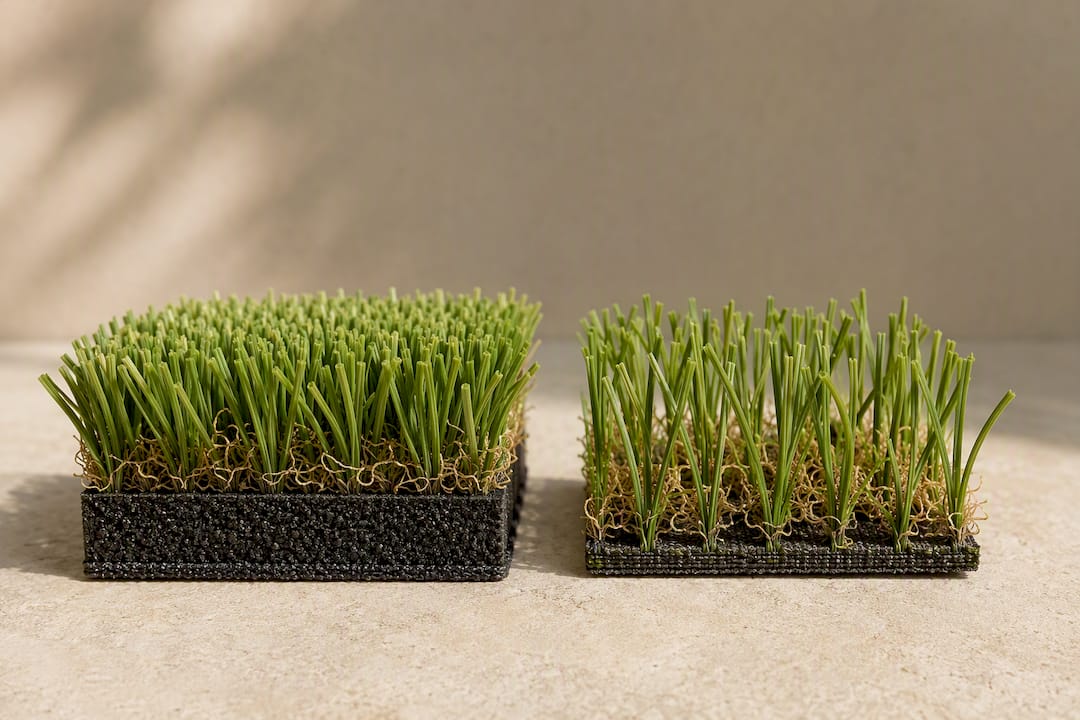
Fiber shape matters just as much. Diamond or W-shaped blades reflect light differently than flat ribbon blades, which affects how “real” the lawn looks from different angles, and it influences how well the fibers stand back up after being flattened.
This is why a well-built medium-pile turf regularly outperforms a cheap, tall-pile product in real yards:
- Higher density resists matting better than height alone.
- Better backing quality improves drainage and long-term durability.
- Fiber shape affects recovery speed after foot traffic or pet use.
- Height should never be the only variable considered when comparing two products side by side.
Prioritize density and face weight for anywhere kids or pets spend real time, and save the height-driven decision for showpiece zones with light use.
How Do You Measure Pile Height and Set Infill Correctly?
Confirming pile height before installation prevents the most common buyer’s remorse: a lawn that looks flatter or shorter than the sample swatch promised.
- Check the spec sheet first. Confirm pile height in millimeters, then convert to inches so it matches how you’re visualizing the space.
- Measure in the field. Use a depth probe or a ruler marked at the backing line, checking multiple spots across the roll rather than trusting one edge measurement.
- Calculate infill depth. Infill should support 60 to 70% of the blade height, leaving roughly 0.5 to 0.75 inches of fiber exposed above it. A 1.5 inch pile needs about 0.90 to 1.05 inches of infill; a 2.0 inch pile needs about 1.20 to 1.40 inches.
- Apply infill in lifts. Spread it in thin layers of about 0.25 to 0.50 inches, power brooming between each pass to settle granules and stand the fibers upright.
- Re-check before finishing. Measure exposed fiber height at several points and top off any low spots until the surface reads even across the whole lawn.
Pro Tip: Skipping the multi-point check is the fastest way to end up with a lawn that looks great from the porch and uneven up close. Spend the extra ten minutes measuring at least five spots per average yard.
Caring for Turf Based on Its Pile Height
Maintenance scales directly with how tall the fiber is, so knowing your pile height tells you exactly what upkeep to expect.
- Short pile: Occasional rinsing and a quick brush after heavy use is usually enough, since the fiber rarely leans over.
- Medium pile: Groom every few weeks with a stiff broom against the grain, and check infill depth once or twice a year since granules settle over time.
- Long pile: Debris gets trapped more easily in taller fiber, so plan on more frequent leaf removal and periodic re-fluffing to keep blades standing upright.
- Pet areas, any height: Rinse regularly and confirm drainage holes in the backing haven’t clogged with infill or waste buildup.
Pro Tip: If your medium-pile lawn starts looking matted in the same one or two spots, that’s almost always a foot-traffic pattern problem, not a pile-height problem. A quick brush against the grain fixes it faster than people expect.
An Installer’s Take on Where Homeowners Go Wrong
The biggest mistake I see is picking a taller pile height and assuming that solves the “looks fake” problem. It doesn’t. Density and face weight do more work than an extra 10 mm of fiber ever will, and plenty of homeowners skip checking those specs entirely.
The second mistake is skipping site measurement before ordering. A spec sheet number means nothing until you’ve confirmed it against your own yard and planned infill depth accordingly.
Before buying, ask any vendor for pile height, face weight, and stitch rate together, not just the one number that sounds impressive on a brochure.
— Noah
Get Pile Height Right the First Time With Professional Installation
Picking the right pile height on paper is one thing. Getting infill depth, grading, and seam placement right in your actual yard is where most DIY installs go sideways. Professional installers handle that whole process, from matching pile height and density to your specific use case to tuning infill so fibers stay upright instead of matting down within a season.

Professional grooming and precise infill placement are what preserve the performance a good spec sheet promises, especially in a desert climate where sun exposure and heat stress fibers differently than in milder regions. If you’re weighing a turf lawn against pavers or a combined outdoor living upgrade, our artificial turf installation team can walk your site and recommend the right pile height and infill plan on the spot. Browse our recent landscaping projects or reach out to schedule a consultation and get a plan built around how your yard actually gets used.
Sources
Infill depth examples and installation steps come from FusionTurf’s infill depth guidance. Pile height and performance context draws on Buy-Grass’s turf thickness guide and Superior Lawn’s buyer’s guide on pile height ranges. For pairing turf with a shaded outdoor structure, see D&Z Pergola’s custom designs.
- Ideal Infill Depth for Artificial Grass to Keep Fibers Upright | FusionTurf
- Pile Height vs Performance: Choosing the Right Turf Thickness - Buy-Grass
- What Pile Height Is Best for Artificial Grass? (Easy Buyer’s Guide)
FAQ
What Is Pile Height on Turf?
Pile height is the length of the turf fiber measured from the top of the backing to the tip of the blade, usually listed in millimeters or inches on a product spec sheet.
What Is the Typical Pile Height for Artificial Turf?
Most residential turf falls between 1.25 and 1.75 inches (30 to 45 mm), with 1.25 to 1.5 inches (30 to 35 mm) as the common sweet spot for everyday lawns.
What Is the Ideal Pile Height for Artificial Turf on a Putting Green?
Putting greens use very short pile, generally under 0.5 inches, since minimal fiber interference keeps ball roll consistent across the surface.
Is a Taller Pile Height Always Better for a Residential Lawn?
No. Taller fiber looks lush in photos but mats down faster under regular foot traffic, which is why density and face weight matter as much as height for everyday yards.