Estimate a 500 sq. ft. Pool Deck in Tucson: Paver Costs and Bid Items
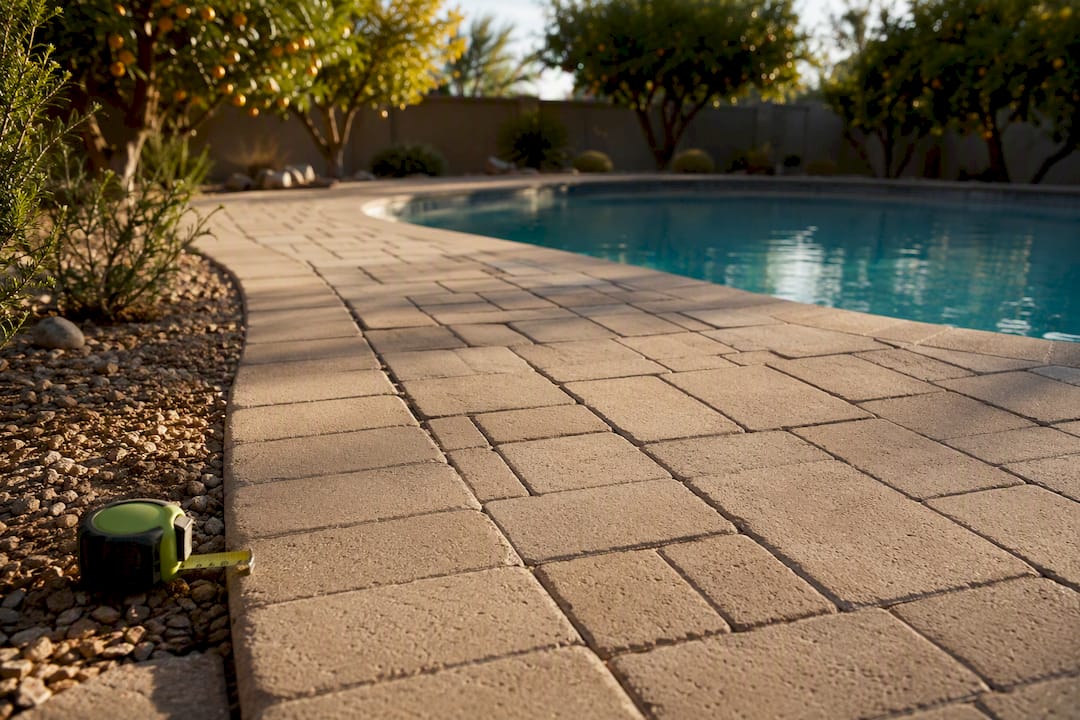
Estimate a 500 sq. ft. Pool Deck in Tucson: Paver Costs and Bid Items
Installed paver pool decks typically run $8 to $18 per square foot, with premium natural stone pushing past $35 in some cases. Material choice, base prep, and site access swing the number more than anything else. A 500-square-foot deck typically costs several thousand dollars installed, and a 900-square-foot deck in travertine or porcelain can be substantially higher.
TL;DR:
- Base preparation, including excavation, gravel, and sand, is key to preventing cracking and settling within a few years of installation.
- Pattern complexity and site conditions, such as curved edges or tight radii, significantly increase material waste and labor costs.
- Contractors’ bids should itemize base depth, edge restraint, coping, and scope of surface removal to ensure accurate comparisons.
- Proper professional installation guarantees longevity and protection against water pooling, shifting, and damage caused by improper base or drainage work.
Table of Contents
- How Much Do Pool Pavers Cost by Material?
- What Makes a Pool Deck Installation Price Go Up?
- What Does a Full Pool Deck Project Actually Cost?
- How Long Does Pool Deck Installation Take?
- What Does a Pool Deck Cost Over Five Years?
- Why Professional Installation Protects Your Investment
- The Real Budgeting Lesson Buried in These Numbers
- Get an Itemized Estimate for Your Pool Deck
- Sources
How Much Do Pool Pavers Cost by Material?
Material choice sets the floor and ceiling of your quote before a single truck shows up. Every paver type carries its own price tag, but the differences also reflect how each one holds up to pool chemicals, sun exposure, and bare feet on a 105-degree afternoon.
Concrete pavers are the budget workhorse. Basic single-color units typically run $6 to $11 per square foot installed, while multi-color patterns or decorative borders push that to $11 to $18. They’re cheaper mainly because they’re mass-produced and fast to install. Contractors don’t need specialty cutting tools, and waste stays low even with curved layouts.
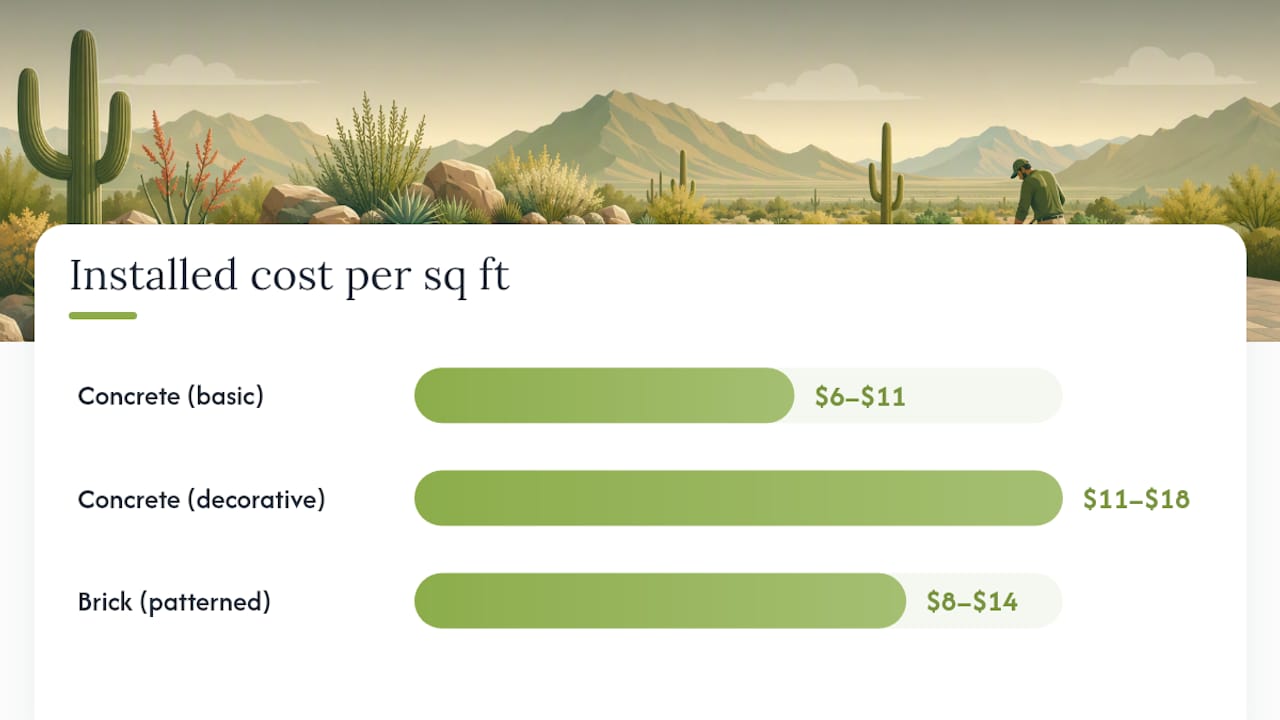
Brick pavers typically cost in the mid-range per square foot installed. Herringbone and basket-weave patterns look sharp around a pool but require more precise cuts than a simple running-bond layout, which nudges labor up. Brick also absorbs more heat than lighter-colored concrete, something worth weighing for a deck that gets full sun most of the day.
Travertine and natural stone are the premium tier, typically $13 to $22 per square foot for travertine and $18 to $35-plus for other natural stone. The appeal is real: travertine stays noticeably cooler underfoot than concrete or brick, which matters a lot around a pool in a hot climate. The tradeoff is ongoing sealing, since natural stone is more porous than manufactured pavers.
Porcelain pavers cost more to install than their material price alone suggests. Cutting porcelain requires diamond-blade equipment and a different installation approach, often thin-set over a concrete slab rather than a compacted gravel base, which can add roughly $2 to $4 per square foot in labor compared to standard concrete units.
- Concrete: $6 to $18+ per sq. ft.
- Brick: $8 to $14 per sq. ft.
- Travertine: $13 to $22 per sq. ft.
- Natural stone: $18 to $35+ per sq. ft.
- Porcelain: material cost plus $2 to $4 per sq. ft. added labor
What Makes a Pool Deck Installation Price Go Up?
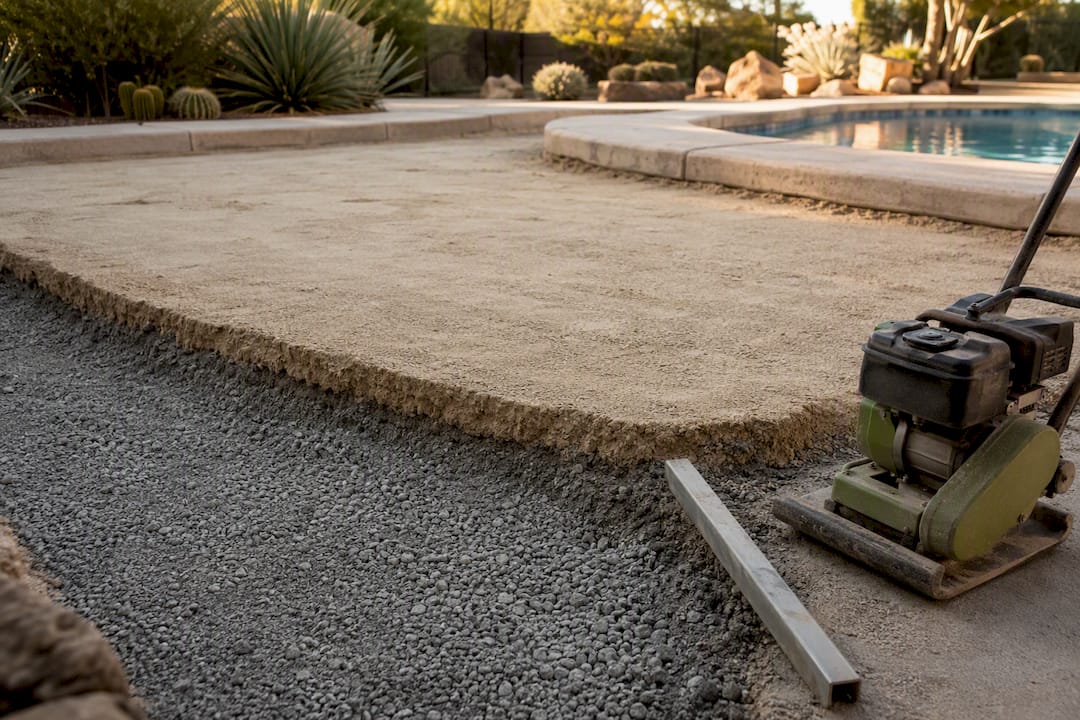
Base preparation is the line item most homeowners underestimate, and it’s also the one that protects your investment for decades. A proper base means excavating the existing surface, laying and compacting several inches of gravel, then adding a bedding layer of sand before pavers ever go down. Skimp here and you’ll see settling and cracked joints within a couple of years, no matter how nice the pavers looked on install day.
Pattern complexity is the second big lever. A simple running-bond layout wastes almost nothing. A herringbone pattern around a curved pool edge can waste 30 to 50 percent more material in cuts alone, which directly inflates the labor line on your bid.
Several add-ons commonly appear once a contractor walks the site:
- Coping (the cap edge along the pool itself) typically adds a premium over field pavers, since it requires precise, often bullnosed cuts to create a safe, non-abrasive edge.
- Channel drains for water runoff, especially on decks with any slope toward the house.
- Grading and drainage correction, common on older properties where the original slope drains toward the pool instead of away from it.
- Permit fees, which vary by municipality and are sometimes required for pool deck resurfacing above a certain square footage.
Pro Tip: Before comparing quotes, ask each contractor for three specific numbers: base depth in inches, edge restraint type, and whether removal of your old surface is included in the price. Two bids that look $3,000 apart often collapse to nearly identical once you account for what’s actually included.
What Does a Full Pool Deck Project Actually Cost?
Per-square-foot ranges only mean something once you attach them to a real footprint. Here’s how the math plays out at three common sizes.
- Small deck (400 to 600 sq. ft.), concrete pavers: At $6 to $11 per square foot installed, a 500-square-foot rectangular deck lands between roughly $3,000 and $5,500, including materials, labor, and standard base prep.
- Medium deck (approximately 900 sq. ft.), travertine or porcelain: At $13 to $22 per square foot for travertine, or a comparable range once porcelain’s added labor is factored in, expect roughly $11,700 to $19,800.
- Large deck (1,500-plus sq. ft.), premium natural stone: At $18 to $35-plus per square foot, a 1,500-square-foot deck runs $27,000 to $52,500 or more, with base and drainage work claiming a larger share of the total because of the sheer volume of gravel and grading involved.
Curved pool edges and tight radii push any of these examples toward the high end of their range, since the extra cutting and waste apply regardless of which material you choose. A rectangular pool with clean access will almost always land cheaper than a freeform lagoon-style pool of the same square footage.
How Long Does Pool Deck Installation Take?
A small deck under 600 square feet typically takes a crew of three to four workers two to three days from demolition to finished joints. A medium deck around 900 square feet usually needs four to five days, and anything above 1,500 square feet can stretch to a week or more, especially with natural stone that requires more careful cutting and sealing.
Weather is the most common delay on outdoor projects, along with hidden site issues like unstable soil or an old irrigation line nobody knew was there. Building in a few contingency days keeps a surprise from derailing your whole schedule.
Before crews arrive, clear furniture and planters off the existing deck, confirm gate access for equipment, and secure pets away from the work zone. These small steps prevent lost hours on day one, which matters when you’re paying for a crew by the day.
What Does a Pool Deck Cost Over Five Years?
Ongoing costs are modest compared to installation, but they add up if ignored. Resealing natural stone or brick every two to three years typically costs $0.40 to $0.80 per square foot for materials and labor combined. Joint sand replacement runs roughly $0.15 to $0.30 per square foot and is usually needed every few years, more often if you notice polymeric sand failing around heavily used areas.
For a 500-square-foot deck, expect a moderate five-year maintenance budget to cover sealing, joint sand touch-ups, and occasional power-washing. That’s a small fraction of the original installation cost, which is why the material decision upfront matters more than the maintenance schedule afterward.
Why Professional Installation Protects Your Investment
Base depth, coping, and drainage are exactly where DIY pool deck projects go wrong, and they’re the hardest mistakes to spot until a season or two later. A professional landscaping company has spent over 15 years installing pavers and travertine across Tucson and Southern Arizona, working specifically with the compacted soil and monsoon drainage patterns that define this region.
Coping that isn’t sloped correctly away from the pool shell leads to water pooling at the edge, which erodes joints and can damage the pool structure over time. A properly built base layer, by contrast, is what keeps pavers from shifting after a few years of desert heat cycles. You can see that kind of detail work in a completed travertine pool deck installation in Marana, where coping and drainage were planned before a single paver went down.
The Real Budgeting Lesson Buried in These Numbers
Homeowners spend most of their research time comparing material prices when the bigger swing factor is almost always labor and site conditions. A basic concrete deck with a complicated curve and poor access can cost more per square foot than a straightforward travertine job on a rectangular pool. That’s the part conventional cost guides gloss over.
The advice to “get three quotes” is correct but incomplete. Getting three quotes without comparing base depth, edge restraint, and removal scope just gets you three different guesses dressed up as bids. The homeowners who budget well are the ones who ask contractors to itemize base prep and coping separately, then compare those line items across bids rather than fixating on the bottom-line number.
If I had to prioritize one thing before signing anything, it’s this: confirm what happens under the pavers, not just what they look like on top. That’s where the five-year and ten-year outcomes actually get decided.
— Noah
Get an Itemized Estimate for Your Pool Deck
Some landscaping companies give Tucson and Southern Arizona homeowners a written, itemized breakdown of base depth, material, coping, and drainage before work begins, so you know exactly what you’re paying for instead of guessing at a lump-sum number.
With experience installing interlocking pavers and travertine across the region’s compacted desert soil, some professional crews know how to build a base and coping system that holds up to Arizona heat cycles and monsoon runoff. Recent work is visible in the project gallery, including finished decks similar to the examples above.
The next step is simple: request an onsite measurement and itemized estimate through the paver installation page, and ask directly about crew schedule and past pool deck references before you compare it against any other bid.
Sources
- Pool Pavers Cost Guide: Price ranges for materials, labor, and install — CurrentCost
- Paver pool deck cost — One and Done Prep
- Concrete pool deck cost guide — ConcreteNetwork
- Travertine pavers and pool coping notes — StoneLux